
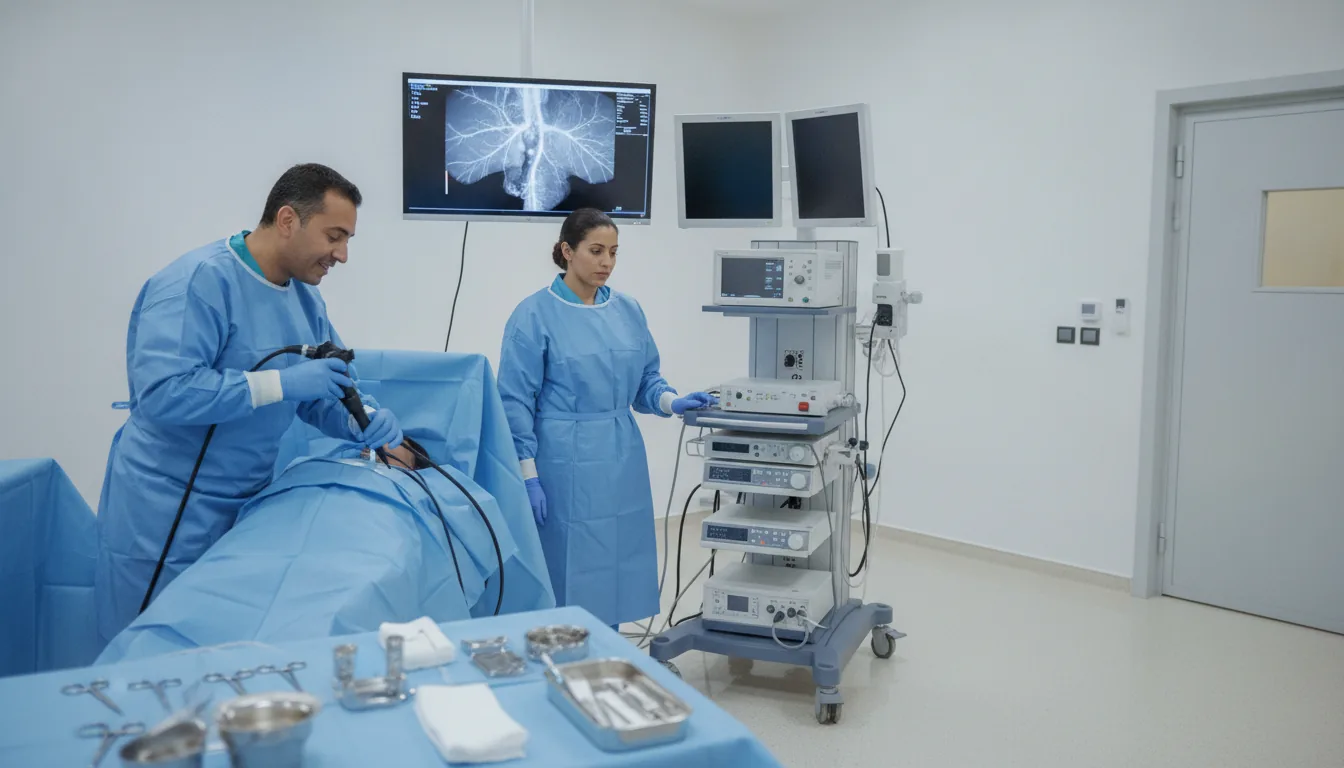
Endoscopic sphincterotomy
Endoscopic opening of the sphincter of Oddi to free the bile ducts, most often performed during an ERCP.
What is it?
When is it indicated?
Widening the small muscle that closes the opening of the bile ducts makes it possible to remove trapped stones, without surgery.
When blocked bile becomes infected, opening the sphincter restores its flow and allows the infection to be treated.
Opening the sphincter facilitates the passage and positioning of stents designed to keep the ducts open.
When this small muscle contracts abnormally and hinders the flow of bile, its controlled incision relieves the pain.
After certain operations, reducing the pressure in the bile ducts by opening the sphincter helps the leak to close.
Preparation
Procedure
General anesthesia
Performed as part of an ERCP: endoscope positioned facing the papilla
Controlled incision of the sphincter using a sphincterotome
Extraction of stones with a balloon or basket catheter if necessary
X-ray confirmation that the bile duct is clear
Post-procedure monitoring as an inpatient
Duration
30 minutes to 1 hour, integrated into the ERCP procedure time
Aftercare & Recovery
In the vast majority of cases, the procedure frees the bile duct in a single session. Eating is resumed gradually after a short period of monitoring. The widened orifice also facilitates any subsequent endoscopic treatments if needed.
Risks and side effects
These risks remain rare. Your surgeon will inform you in detail before the procedure.
Request a Quote
Contact us to schedule a consultation or receive a personalized quote.
Request a Quote +216 36 402 000