
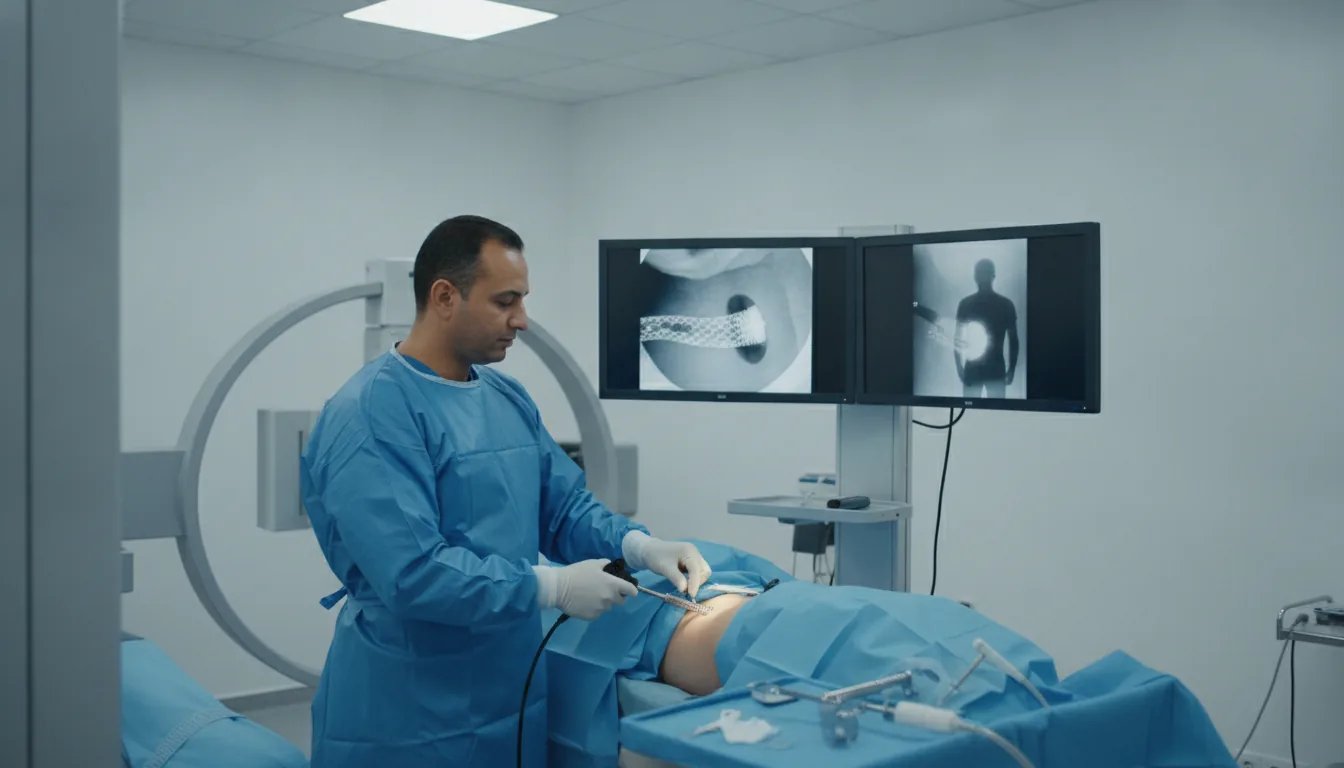
Digestive stent placement
Surgeries/Endoscopic/Digestive stents

Digestive stent placement

Endoscopic placement of stents to restore passage through the digestive tract or bile ducts, without surgery.

What is it?

Digestive stent placement consists of installing, by endoscopy, a small expandable tube (stent) at a narrowing of the esophagus, stomach, duodenum, colon or bile ducts. Once deployed, the stent keeps the passage open and restores the flow of food, bowel contents or bile. This procedure, performed without any incision, rapidly improves the patient's comfort: return to eating, resolution of jaundice, relief of an obstruction. It can serve as a lasting treatment or as a step before surgery, depending on each patient's situation. At Clinique Pasteur Tunis, the placement of digestive and biliary stents is performed under anesthesia, with endoscopic and X-ray guidance, by a team trained in interventional endoscopy. A short inpatient monitoring period usually follows the procedure.
Digestive stent placement

When is it indicated?

Narrowing of the esophagus hindering eating

When the esophagus is too narrow to let food through, a stent keeps it open and makes eating possible again.

Duodenal or gastric obstruction to be crossed

When the stomach or the first part of the intestine is blocked, a stent restores the passage of food without surgery.

Colonic obstruction requiring relief

When the colon is obstructed, a stent placed through the natural orifices relieves the blockage and restores bowel function.

Obstruction of the bile ducts with jaundice

When bile no longer flows, a small stent reopens the duct and the jaundice subsides within a few days.

Digestive leak or fistula to be covered temporarily

A stent can temporarily cover a leaking area while the wall heals.

Preparation

1Endoscopic and imaging work-up to determine the location and extent of the narrowing
2Anesthesia consultation
3Fasting for 6 hours before the procedure
4Adjustment of anticoagulants according to medical advice
5Information on the dietary instructions to follow after placement

Procedure

1

General anesthesia or deep sedation

2

Endoscopic and X-ray identification of the narrowed area

3

Crossing of the obstruction using a guidewire

4

Gradual deployment of the stent under dual guidance

5

Verification of correct positioning and patency

6

Post-procedure monitoring during a short hospital stay

Duration

30 minutes to 1 hour

Aftercare & Recovery

The benefit is generally rapid: return to eating, improved bowel function or resolution of jaundice within a few days. Tailored dietary instructions are provided to preserve the patency of the stent, and regular follow-up is arranged.

Risks and side effects

Temporary pain or discomfort after placement
Migration of the stent requiring repositioning
Secondary blockage of the stent, treatable endoscopically
Perforation, a rare complication managed without delay

These risks remain rare. Your surgeon will inform you in detail before the procedure.

Request a Quote

Contact us to schedule a consultation or receive a personalized quote.

Request a Quote +216 36 402 000

At a glance

Duration: 30 minutes to 1 hour
Preparation: Required
Dedicated specialist team