
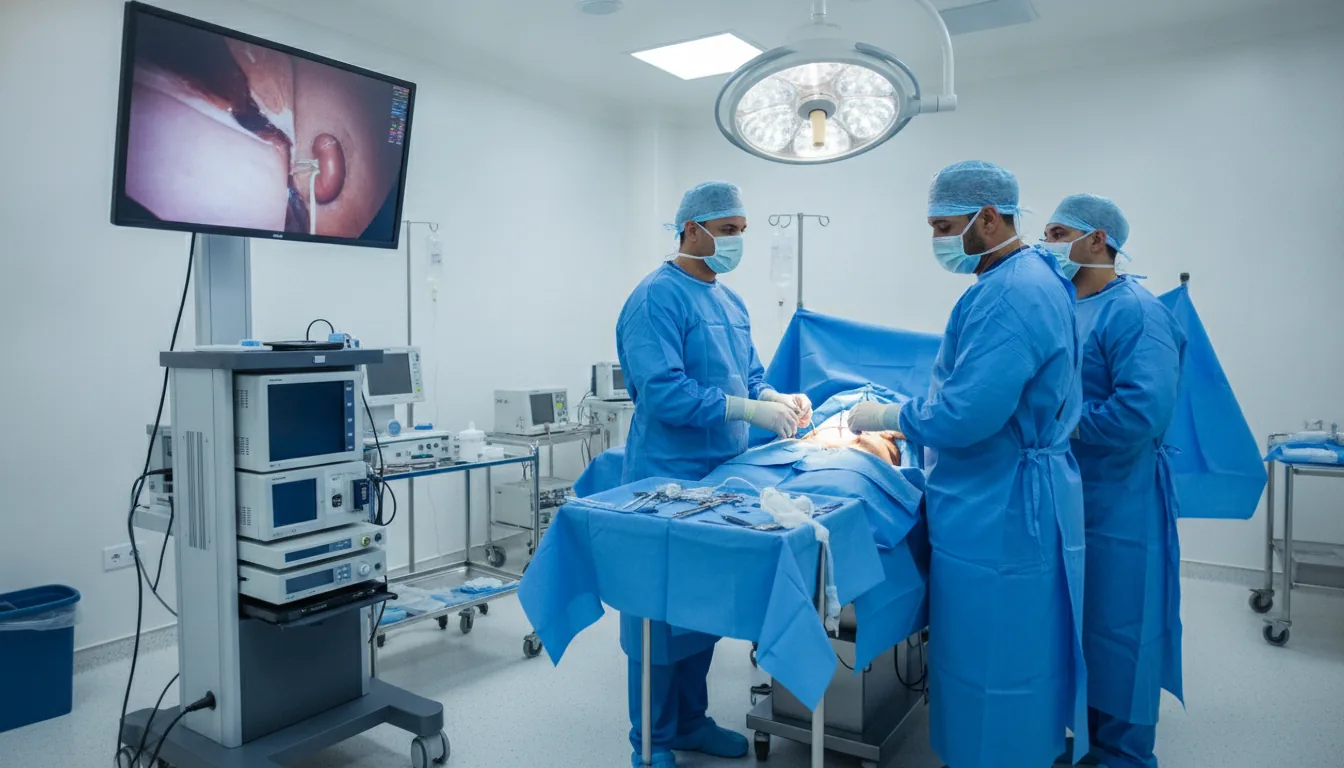
Laparoscopic nephrectomy

Laparoscopic nephrectomy

Total or partial removal of a kidney by laparoscopy, for a tumour or a non-functioning kidney, with a lighter post-operative course.

What is it?

Laparoscopic nephrectomy involves removing a kidney, in whole or in part, through small incisions, under camera guidance. It is mainly indicated in cases of kidney tumour or when a kidney destroyed by chronic disease is a source of complications. Whenever the situation allows, partial nephrectomy is preferred: only the diseased area is removed, which preserves kidney function as much as possible. The magnified view of laparoscopy allows fine dissection of the kidney's vessels and precise vascular control. Living a normal life with a single kidney is entirely possible: the remaining kidney performs the filtering function, subject to simple follow-up. At Clinique Pasteur Tunis, laparoscopic nephrectomy is performed by experienced urologists, with a complete imaging facility and attentive post-operative monitoring. The surgical specimen is sent for pathological analysis.
Laparoscopic nephrectomy

When is it indicated?

Kidney tumour requiring surgical excision

When a tumour develops on the kidney, removing the diseased area, or the whole kidney if necessary, is the main treatment.

Destroyed, non-functioning kidney causing pain or infections

A kidney that no longer works can perpetuate pain and repeated infections; removing it brings lasting relief, with the remaining kidney doing the work.

Certain complicated kidney malformations

When a malformation of the kidney causes repeated complications, its removal may be the best solution.

Kidney causing resistant hypertension, in selected cases

In rare situations, a diseased kidney perpetuates high blood pressure that is difficult to control; its removal can help normalise it.

Preparation

1Complete work-up: imaging (CT scan or MRI) and assessment of kidney function
2Anaesthesia consultation
3Fasting for 6 hours before the procedure
4Adjustment of anticoagulants according to medical advice
5Detailed information on living with a single kidney where applicable

Procedure

1

General anaesthesia

2

Appropriate positioning and introduction of the instruments through small incisions

3

Dissection of the kidney and early control of its vessels

4

Total removal of the kidney, or partial removal limited to the diseased area

5

Extraction of the specimen in a protective bag

6

Check for absence of bleeding and closure of the incisions

Duration

2 to 4 hours

Aftercare & Recovery

Recovery is generally simpler than after open surgery: early mobilisation, moderate pain and a short hospital stay. Kidney function is monitored after the procedure, and the result of the pathological analysis guides long-term follow-up.

Risks and side effects

Bleeding during or after the operation, rare thanks to early vascular control
Transient urine leak after partial nephrectomy, monitored and treated if needed
Infection, uncommon with the minimally invasive approach
Conversion to open surgery if necessary, in the patient's best interest

These risks remain rare. Your surgeon will inform you in detail before the procedure.

Request a Quote

Contact us to schedule a consultation or receive a personalized quote.

Request a Quote +216 36 402 000

At a glance

Duration: 2 to 4 hours
Preparation: Required
Dedicated specialist team