
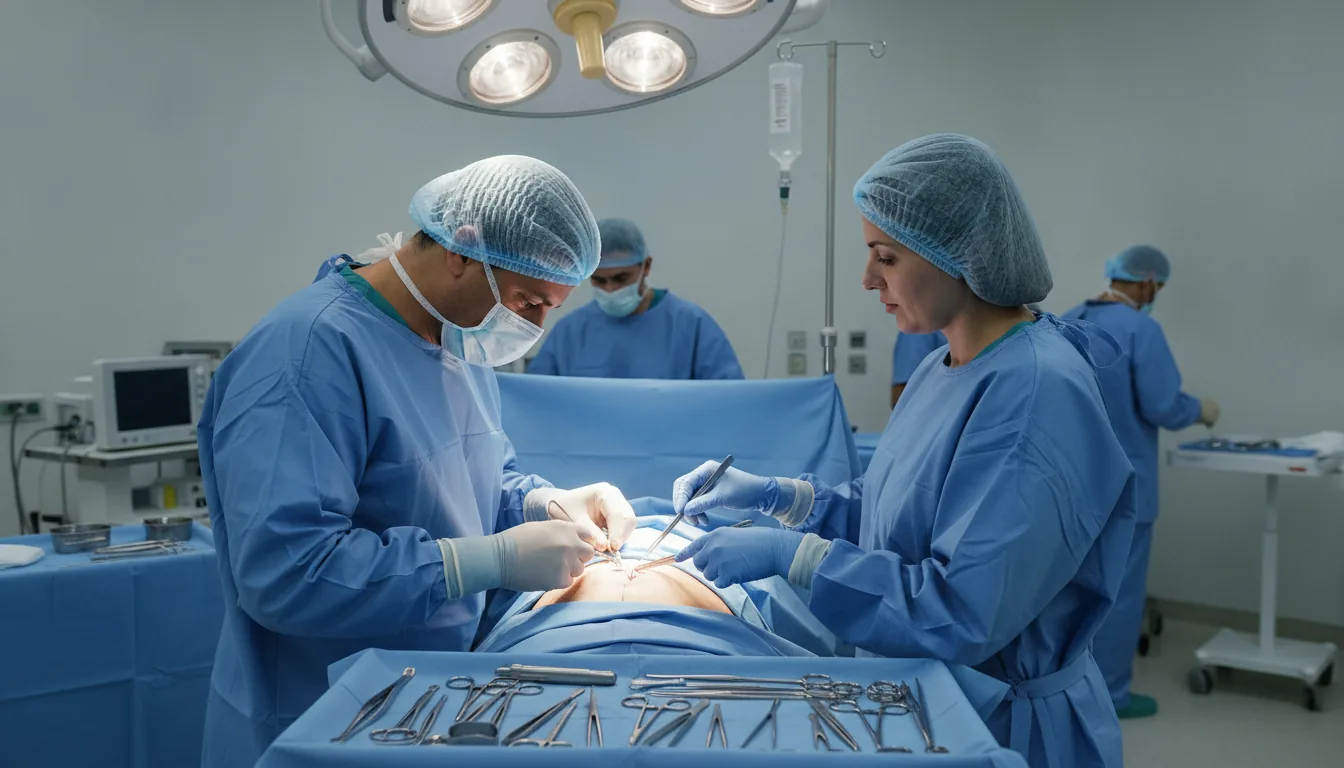
Post-weight-loss reconstructive surgery (abdominoplasty)
Surgeries/Bariatric/Post-weight-loss surgery

Post-weight-loss reconstructive surgery (abdominoplasty)

Surgical correction of excess skin after major weight loss, to complete the transformation and restore body comfort.

What is it?

After major weight loss, particularly following bariatric surgery, stretched skin does not always fully retract. Excess skin may persist on the abdomen, arms, thighs or chest, causing physical discomfort, irritation and aesthetic concerns. Post-weight-loss reconstructive surgery corrects these after-effects and completes the transformation. The most common procedure is abdominoplasty: it removes excess skin and fat from the abdomen, tightens the muscular wall if necessary and reshapes the figure. Other procedures may be offered as needed: arm or thigh lift, breast surgery, often planned in several stages. These procedures are considered once weight has been stable for several months, with good nutritional balance — essential conditions for quality healing and a lasting result. At Clinique Pasteur Tunis, post-weight-loss reconstructive surgery is performed by plastic surgeons working in coordination with the bariatric team, ensuring continuity of care from the start of the weight-loss journey through to the complete restoration of the figure.
Post-weight-loss reconstructive surgery (abdominoplasty)

When is it indicated?

Excess abdominal skin after major weight loss

After significant weight loss, stretched skin does not always retract: the procedure removes this excess to reshape the figure.

Irritation or skin infections in the folds

Skin folds can become moist and irritated, especially in hot weather: removing the excess skin puts an end to these daily discomforts.

Functional discomfort in movement or when dressing

When the apron of skin hinders walking, sport or the choice of clothing, reconstructive surgery restores ease and body comfort.

Laxity of the abdominal wall

Abdominal muscles stretched by years of excess weight can be tightened during the same procedure, for a flatter, firmer abdomen.

Weight stable for several months with good nutritional balance

The procedure is scheduled once the weight is stable and the body well nourished: these conditions guarantee good healing and a lasting result.

Preparation

1Weight stable for several months
2Nutritional work-up and correction of any deficiencies
3Consultation with the plastic surgeon and definition of the surgical plan
4Pre-operative anaesthesia consultation
5Stopping smoking strongly recommended to promote healing
6Fast for 6 hours before the procedure

Procedure

1

General anaesthesia

2

Precise pre-operative markings on the skin

3

Removal of excess skin and fat

4

Tightening of the muscular wall if necessary

5

Repositioning of the navel during an abdominoplasty

6

Careful closure in several layers

7

Fitting of a compression garment

Duration

2 to 3 hours depending on the extent

Aftercare & Recovery

The figure is transformed immediately, with the final result becoming apparent after a few months, once the swelling has subsided and the scars have matured. Physical comfort and quality of life improve markedly, completing the benefits of the weight loss.

Risks and side effects

Scars, whose appearance improves gradually with time and care
Temporary swelling and bruising
Localised delayed healing, more common in smokers
Minor touch-ups sometimes needed to perfect the result

These risks remain rare. Your surgeon will inform you in detail before the procedure.

Request a Quote

Contact us to schedule a consultation or receive a personalized quote.

Request a Quote +216 36 402 000

At a glance

Duration: 2 to 3 hours depending on the extent
Preparation: Required
Dedicated specialist team