
Mini gastric bypass
Surgeries/Bariatric/Mini bypass

Mini gastric bypass

A simplified variant of the gastric bypass with a single anastomosis, combining effective weight loss with a shorter operative technique.

What is it?

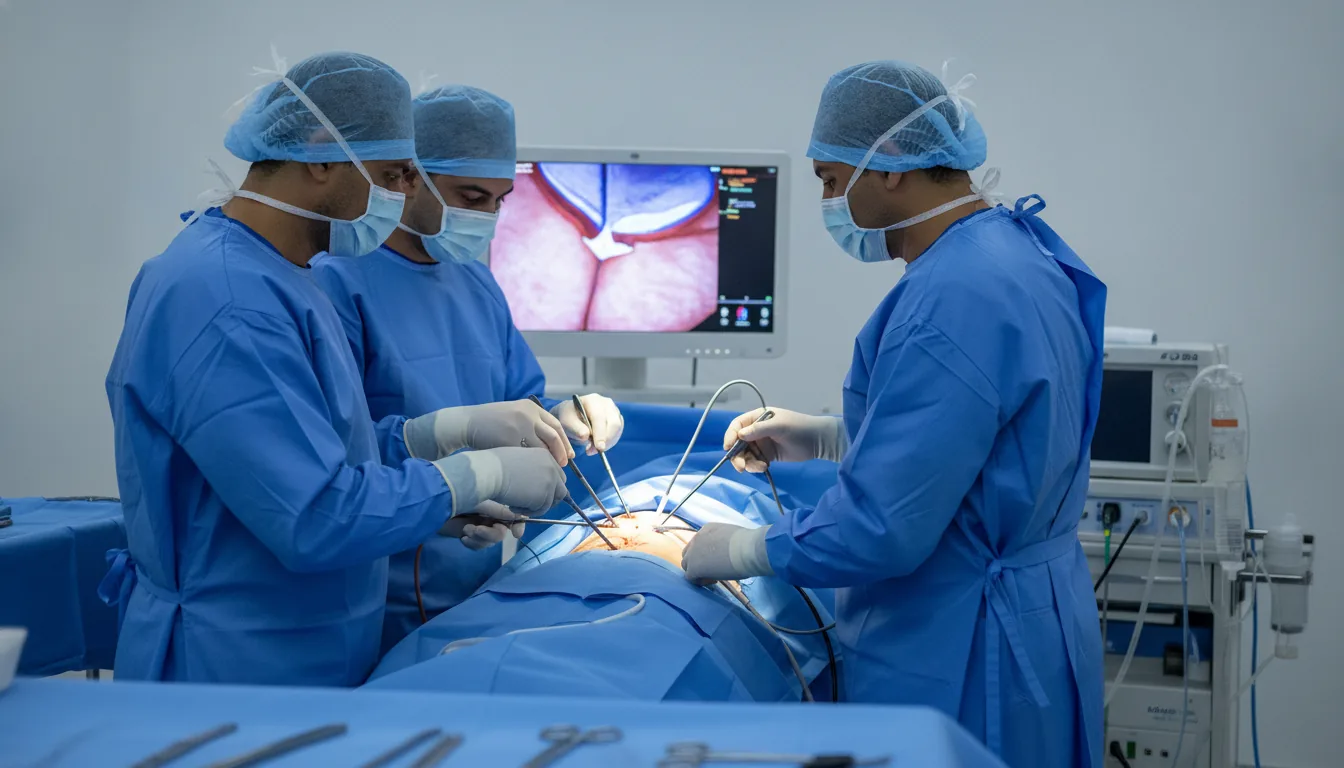
The mini gastric bypass, also known as the omega-loop or one-anastomosis bypass, is a variant of the classic bypass. It combines the creation of an elongated gastric pouch with a single connection (anastomosis) to the intestine, compared with two for the Roux-en-Y bypass. The technique is therefore simpler and the operating time shorter, with comparable effectiveness in terms of weight loss. Like other bariatric procedures, it acts both on meal volume and on the hormonal mechanisms that regulate hunger and metabolism. It is particularly suitable for certain patient profiles, with the choice discussed case by case with the multidisciplinary team. The mini bypass is performed entirely by laparoscopy and, like the classic bypass, requires vitamin supplementation and regular long-term medical and nutritional follow-up. At Clinique Pasteur Tunis, the mini gastric bypass is part of the full range of bariatric techniques on offer, making it possible to recommend to each patient the procedure best suited to their situation, within a coordinated care pathway.
Mini gastric bypass

When is it indicated?

Severe or morbid obesity confirmed by the multidisciplinary team

Like other obesity surgeries, the mini bypass is intended for people whose excess weight seriously affects their health, after the case has been approved by the team.

Type 2 diabetes or other complications associated with obesity

The procedure acts on the hormonal mechanisms that regulate hunger and blood sugar, which helps to improve diabetes and other obesity-related conditions.

Anatomical or medical circumstances favouring this technique over the Roux-en-Y bypass

In some patients, the configuration of the abdomen or their general health makes this construction simpler and safer than the classic bypass: the choice is discussed case by case.

Revision surgery after a first bariatric procedure in certain cases

The mini bypass may be offered to correct or convert a first obesity surgery whose result is insufficient, depending on each patient's situation.

Motivated patient, accepting long-term follow-up and supplementation

A lasting commitment is required: daily vitamins and regular consultations are an integral part of the treatment and guarantee a stable result.

Preparation

1Complete pre-operative work-up (blood tests, cardiac assessment, digestive endoscopy)
2Nutritional and dietary assessment
3Psychological assessment
4Pre-operative anaesthesia consultation
5Fast for 6 hours before the procedure

Procedure

1

General anaesthesia

2

Laparoscopy through small abdominal incisions

3

Creation of a long, narrow gastric pouch

4

Creation of a single anastomosis between the pouch and the intestine

5

Checking that the construction is leak-proof

6

Closure of the incisions and post-operative monitoring

7

Gradual reintroduction of food following a precise protocol

Duration

1 hour 30 minutes to 2 hours

Aftercare & Recovery

Weight loss is comparable to that of the classic bypass, progressing over the months following the procedure, with frequent improvement of associated conditions. Nutritional follow-up and daily vitamin supplementation are an integral part of the treatment and guarantee a lasting result.

Risks and side effects

Usual surgical risks, reduced by the laparoscopic technique
Bile reflux, specific to this construction, monitored during follow-up
Anastomotic leak, rare and detected through post-operative monitoring
Nutritional deficiencies, prevented by follow-up and supplementation

These risks remain rare. Your surgeon will inform you in detail before the procedure.

Request a Quote

Contact us to schedule a consultation or receive a personalized quote.

Request a Quote +216 36 402 000

At a glance

Duration: 1 hour 30 minutes to 2 hours
Preparation: Required
Dedicated specialist team