
Bariatric revision surgery
Surgeries/Bariatric/Bariatric revision

Bariatric revision surgery

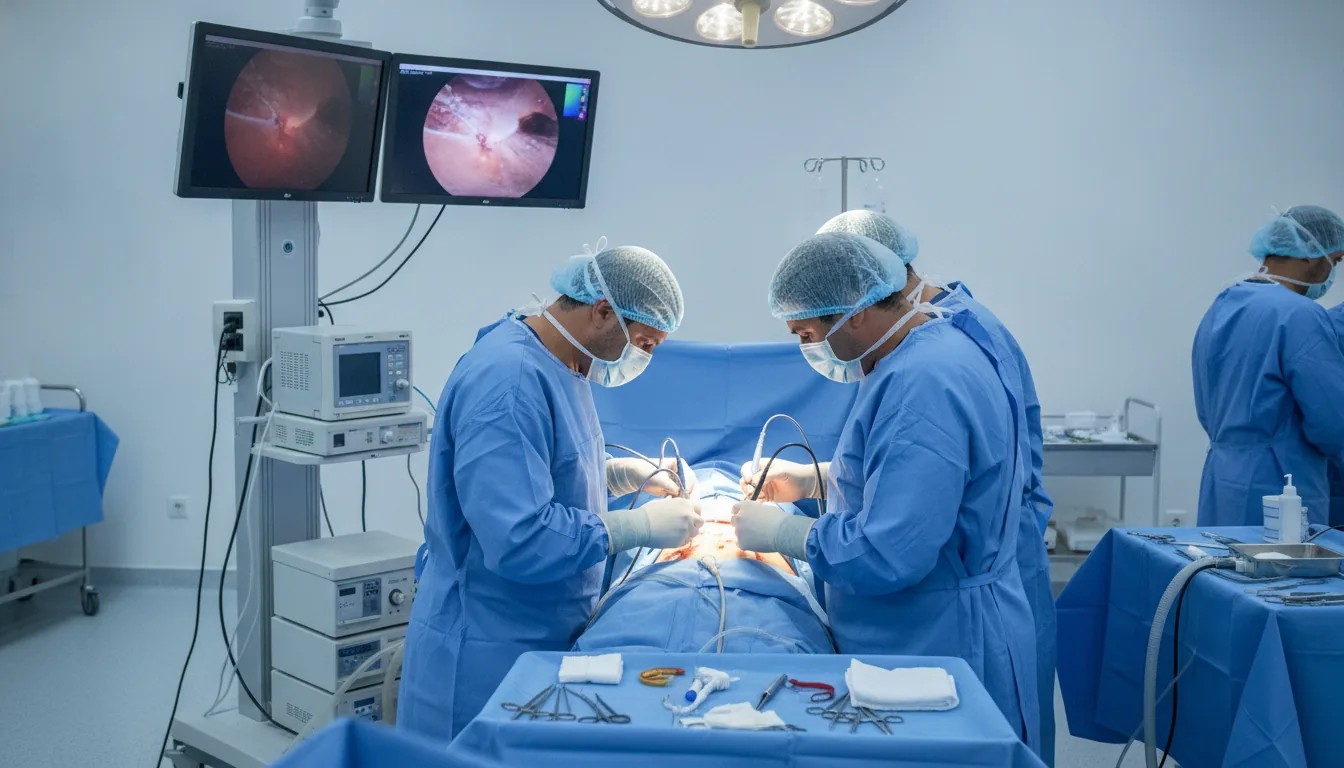
Reoperation after a first obesity surgery, to correct a complication or restart weight loss using a suitable technique.

What is it?

Bariatric revision surgery is intended for patients who have already undergone obesity surgery and whose result is insufficient, who have regained weight, or who have a complication of their first procedure: disabling reflux after a sleeve, intolerance to a gastric band, pouch dilation, among other situations. Each case is unique and requires an in-depth assessment: endoscopic and radiological evaluation of the existing construction, analysis of eating habits and of the weight-loss history, and discussion by the multidisciplinary team. The proposed strategy may involve converting a sleeve into a bypass, removing a band and performing a new procedure, or correcting the existing construction. These procedures are technically more demanding than a first surgery, because of adhesions and existing anatomical changes. They require an experienced surgical team and comprehensive technical facilities. Clinique Pasteur Tunis, thanks to its high volume of bariatric activity, has the experience needed to manage these complex situations, including for patients initially operated on in other institutions, in Tunisia or abroad.
Bariatric revision surgery

When is it indicated?

Weight regain after a first bariatric surgery

When weight climbs back despite a first operation, an appropriate reoperation often makes it possible to restart lasting weight loss.

Insufficient weight loss despite properly followed care

If the result of the first surgery falls short of expectations even though follow-up has been respected, conversion to another technique may be offered.

Disabling gastro-oesophageal reflux after sleeve gastrectomy

Troublesome acid reflux can appear after a sleeve: conversion to a bypass effectively relieves this reflux while continuing weight loss.

Complication or intolerance of a gastric band

A poorly tolerated band, causing vomiting or discomfort, can be removed and replaced by another, better-suited bariatric technique.

Dilation of the gastric pouch or abnormality of the initial construction

Over time, the initial construction can stretch or become distorted and lose effectiveness: revision corrects this anatomical abnormality.

Preparation

1Complete assessment of the existing construction (endoscopy, imaging)
2Review of the records from the first procedure
3Nutritional and psychological reassessment
4Discussion of the case at a multidisciplinary meeting
5Pre-operative anaesthesia consultation
6Fast for 6 hours before the procedure

Procedure

1

General anaesthesia

2

Laparoscopy with careful release of adhesions

3

Intra-operative assessment of the existing construction

4

Correction or conversion to the chosen technique

5

Checking that the new construction is leak-proof

6

Enhanced post-operative monitoring

7

Gradual, supervised reintroduction of food

Duration

2 to 3 hours depending on complexity

Aftercare & Recovery

Depending on the case, revision corrects the complication involved and restarts lasting weight loss. Recovery is managed with careful monitoring, and multidisciplinary follow-up is reinforced to consolidate the result over time.

Risks and side effects

Surgical risks slightly higher than for a first procedure, managed by the team's experience
Leak or fistula, rare and closely monitored
Possible need for successive surgical stages in certain complex situations

These risks remain rare. Your surgeon will inform you in detail before the procedure.

Request a Quote

Contact us to schedule a consultation or receive a personalized quote.

Request a Quote +216 36 402 000

At a glance

Duration: 2 to 3 hours depending on complexity
Preparation: Required
Dedicated specialist team