
Neuronavigation
Surgeries/Neurosurgery/Neuronavigation

Neuronavigation

Computer-assisted surgical guidance technology, a true GPS for the brain, that increases the precision and safety of operations.

What is it?

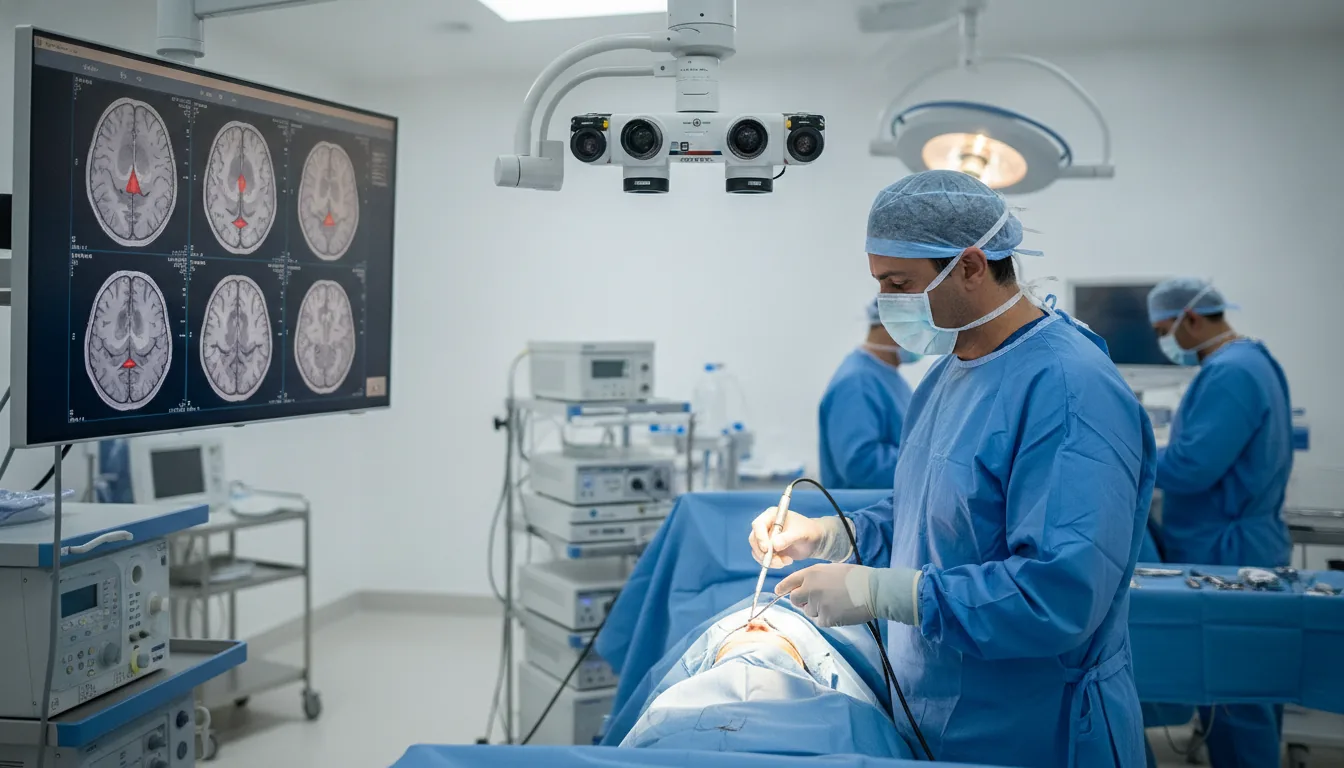
Neuronavigation is a computer-assisted surgical guidance technology, often compared to a GPS for the brain. It allows the neurosurgeon to navigate the patient's anatomy in real time with millimetric precision, by superimposing the position of the instruments onto the MRI or CT images taken before the operation. In practice, the patient's pre-operative images are loaded into the neuronavigation system and then matched to the actual position of the head in the operating room. Throughout the operation, the surgeon sees on a screen the exact position of the instruments relative to the lesion and to the functional areas to be preserved. The benefits are tangible: smaller and perfectly centered cranial openings, more direct access to the lesion, greater protection of the sensitive areas of the brain and, overall, more precise and safer operations. Neuronavigation is particularly valuable for deep tumors, small lesions and surgery in functional areas. At Clinique Pasteur Tunis, the neurosurgery department has a neuronavigation system coupled with high-resolution pre-operative MRI, used routinely for cranial surgery, directly benefiting patient safety.
Neuronavigation

When is it indicated?

Brain tumor surgery, particularly for deep or small tumors

To reach a deep or tiny lesion, neuronavigation guidance makes it possible to follow the shortest and safest path through the brain.

Targeted brain biopsies

When a simple tissue sample is needed to analyze a lesion, neuronavigation guides the needle with millimetric precision.

Surgery near functional areas (movement, language)

Near the regions that control movement or speech, this guidance helps the surgeon preserve these essential functions.

Epilepsy surgery

The area where the seizures originate is identified on imaging and then located with exact precision in the operating room thanks to neuronavigation.

Certain operations on vascular malformations

To approach a malformation of the brain's vessels, the guidance allows a perfectly centered opening and a more direct and safer access.

Preparation

1High-resolution brain MRI performed before the operation according to a dedicated protocol
2Planning of the surgical trajectory on the neuronavigation console
3Usual preparation for any neurosurgical operation (work-up, anesthesia, fasting)

Procedure

1

Loading of the patient's images into the neuronavigation system

2

Positioning of the patient and matching of the images to their actual position

3

Verification of the accuracy of the registration before starting

4

Real-time guidance of the instruments throughout the operation

5

Continuous monitoring of the position relative to the lesion and to the areas to be preserved

Duration

Integrated into the duration of the neurosurgical operation

Aftercare & Recovery

Neuronavigation contributes to more complete and safer resections, smaller cranial openings and better preservation of neurological functions. It directly contributes to the quality of post-operative recovery.

Risks and side effects

Neuronavigation is a guidance tool with no risk of its own for the patient
It reduces the risks of surgery by increasing the precision of the procedure

These risks remain rare. Your surgeon will inform you in detail before the procedure.

Request a Quote

Contact us to schedule a consultation or receive a personalized quote.

Request a Quote +216 36 402 000

At a glance

Duration: Integrated into the duration of the neurosurgical operation
Preparation: Required
Dedicated specialist team