
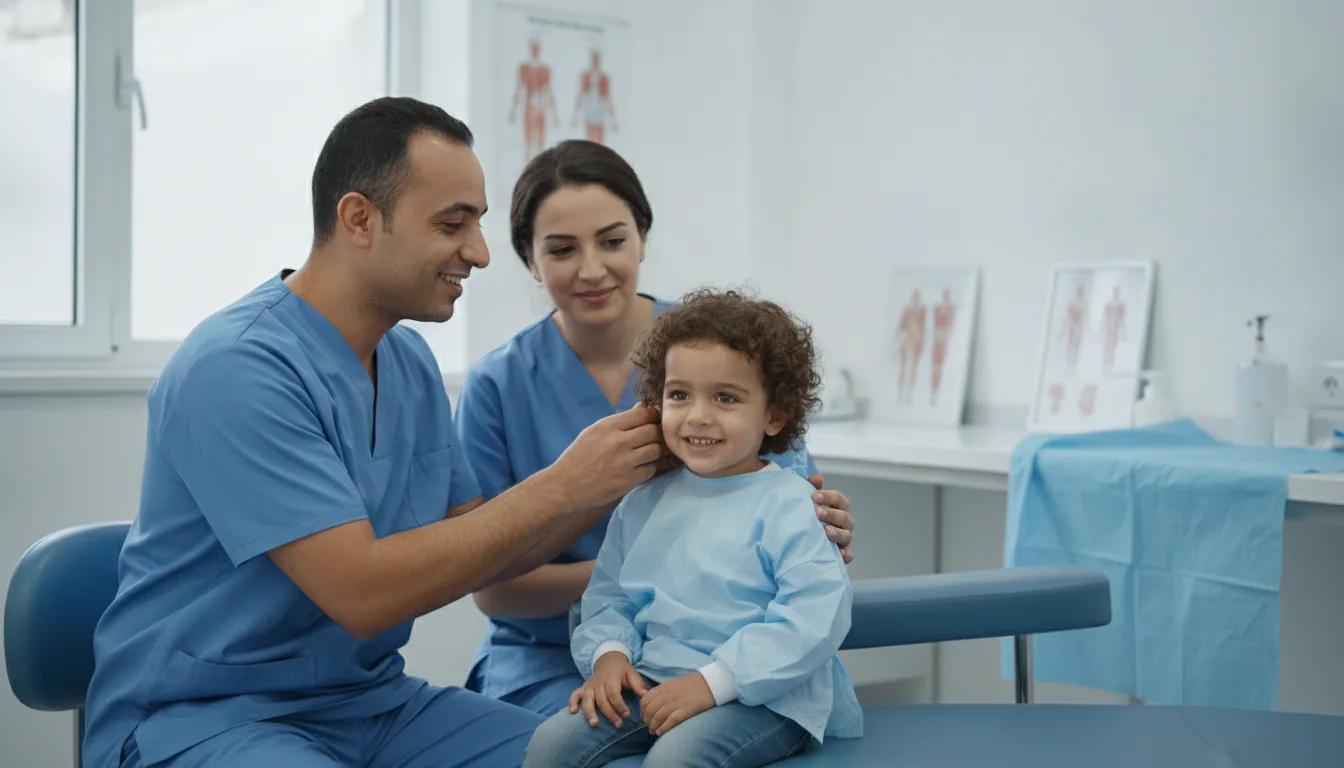
Otoplasty (ear surgery)

Otoplasty (ear surgery)

Surgical correction of protruding ears, in children and adults alike, using a discreet technique with a simple recovery.

What is it?

Otoplasty is the procedure that corrects protruding ears by reshaping the cartilage to restore the natural folds of the ear and bring it closer to the head. Often a source of teasing in children and embarrassment in adults, this unflattering feature can be corrected by a simple, discreet and permanent operation. The procedure can be carried out as soon as the child expresses the wish, as the ear reaches most of its growth early in childhood. In adults, it is possible at any age. The incision is hidden behind the ear, in the natural groove, and leaves no visible scar from the front. The operation consists of recreating the folds of the cartilage and repositioning the ear symmetrically and naturally, without an artificial "pinned-back" look. A protective headband is worn for a few weeks, mainly at night, to protect the result. At Clinique Pasteur Tunis, otoplasty is performed as day surgery in the vast majority of cases, with gentle, reassuring care suited to children and adults alike, and follow-up through to complete healing.
Otoplasty (ear surgery)

When is it indicated?

Protruding ears, on one or both sides

Whether one ear or both protrude, the procedure repositions them close to the head in a natural and permanent way.

Absence of the natural cartilage fold (underdeveloped antihelix)

When the natural fold of the ear has not formed, the surgeon recreates it to restore the ear's usual contour.

Excess conchal cartilage pushing the ear forward

Overdeveloped cartilage at the centre of the ear pushes it forward; reducing it allows the ear to be brought closer to the head.

Aesthetic embarrassment or psychological impact, particularly in children

When teasing or embarrassment weighs on self-confidence, particularly at school, a simple correction puts an end to this distress.

Marked asymmetry between the two ears

If one ear protrudes noticeably more than the other, the procedure restores symmetry for a harmonious result.

Preparation

1Consultation with the surgeon and examination of the ears
2Pre-operative anaesthesia consultation
3Fast for 6 hours before the procedure
4Obtain the prescribed protective headband
5Wash your hair the day before the procedure

Procedure

1

Local anaesthesia with sedation or general anaesthesia (particularly in children)

2

Incision concealed in the groove behind the ear

3

Reshaping of the cartilage and recreation of the natural folds

4

Repositioning of the ear close to the head

5

Fine sutures and a protective dressing

6

Return home the same day in most cases

Duration

About 1 hour

Aftercare & Recovery

The result is visible as soon as the first dressing is removed. The headband is then worn at night for a few weeks to protect the ears. The correction is permanent, with scars invisible from the front and a natural appearance.

Risks and side effects

Temporary swelling and bruising of the ear
Sensitivity of the ears to cold for a few weeks
Small residual asymmetry, rare and amenable to a touch-up

These risks remain rare. Your surgeon will inform you in detail before the procedure.

Request a Quote

Contact us to schedule a consultation or receive a personalized quote.

Request a Quote +216 36 402 000

At a glance

Duration: About 1 hour
Preparation: Required
Dedicated specialist team