
Hair transplant
Surgeries/Cosmetic/Hair transplant

Hair transplant

Hair restoration using micrografts, to naturally and lastingly restore density to thinning areas.

What is it?

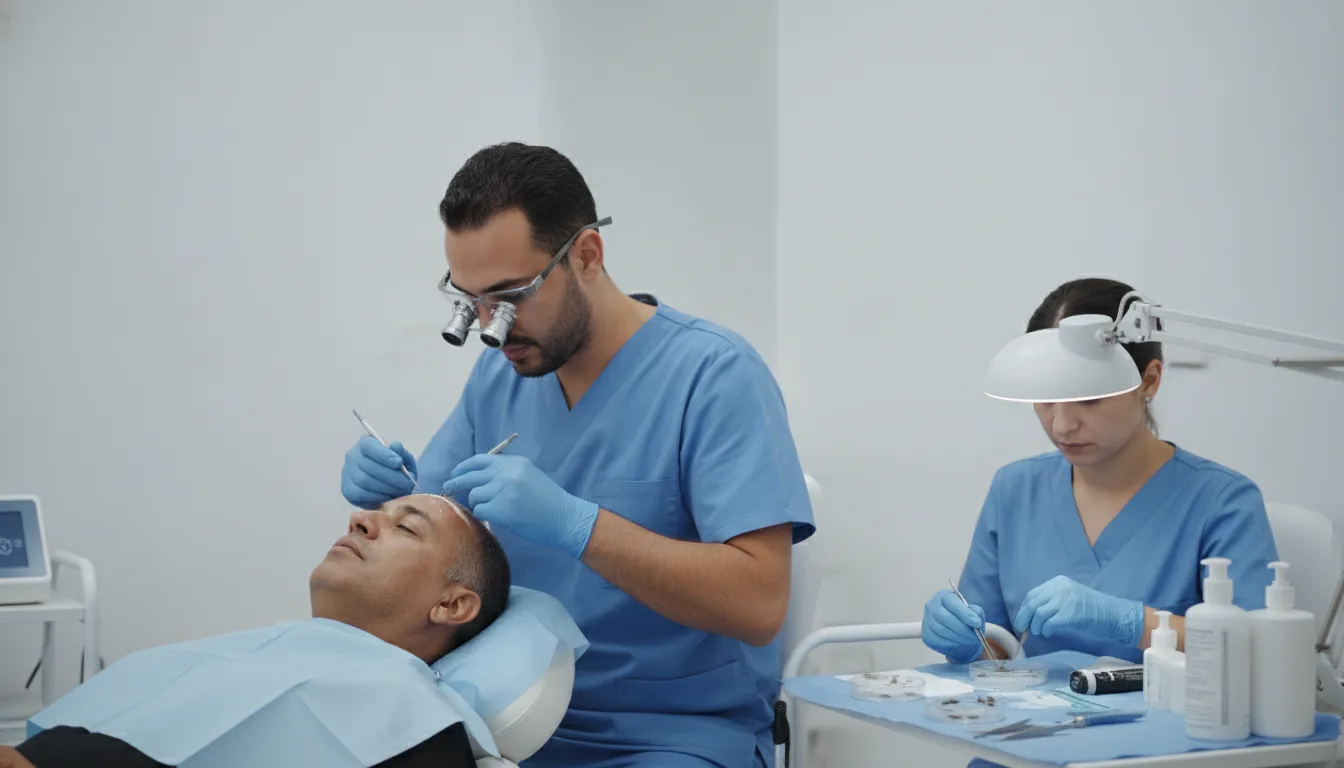
Hair transplantation lastingly restores thinning areas of the scalp by reimplanting the patient's own hair, harvested from the crown area at the back of the head, where the hair is programmed to last a lifetime. The transplanted grafts regrow naturally and permanently. Current micrografting techniques, such as FUE (follicular unit extraction), allow follicles to be harvested one by one, without a linear scar, and reimplanted with great precision, respecting the natural direction and density of the hair. The design of the hairline receives particular attention for an undetectable result. The session takes place under local anaesthesia, in a comfortable position, and does not require hospitalisation. The recovery is simple: small scabs disappear within a few days and regrowth develops progressively over the months. At Clinique Pasteur Tunis, hair transplantation is performed in a rigorous medical environment, with a personalised hair assessment, precise planning of the result and follow-up of regrowth through to the final result.
Hair transplant

When is it indicated?

Stabilised male-pattern baldness (androgenetic alopecia)

Once hair loss has stabilised, the transplant lastingly restores density to thinning areas using the patient's own hair.

Hair thinning in women

In women, thinning hair can be densified with micrografts, after an assessment to understand the cause.

Receding temples or a receded hairline

When the hairline thins at the sides or recedes, the transplant redraws a natural, discreet hairline.

Thinning crown

The thinning area at the top of the head can be densified with grafts harvested from the back of the head, where the hair is made to last a lifetime.

Scalp scars to camouflage

A visible scar in the hair, after an injury or an operation, can be concealed by implanting grafts.

Preparation

1Hair assessment consultation and definition of the transplant plan
2Work-up into the cause of hair loss if necessary
3Short hair over the donor area depending on the technique
4Avoid aspirin and anti-inflammatories as instructed
5Have a light meal before the session

Procedure

1

Design of the hairline and planning of the areas to be densified

2

Local anaesthesia of the scalp

3

Harvesting of follicles one by one from the donor area

4

Preparation and sorting of the grafts

5

Precise reimplantation respecting the natural direction of the hair

6

Care instructions and return home the same day

Duration

Half a day to a full day depending on the number of grafts

Aftercare & Recovery

Small scabs disappear within a few days. After a normal temporary shedding of the grafted hair shafts, regrowth begins after a few months and the final result, natural and permanent, is appreciated after about a year.

Risks and side effects

Temporary redness and small scabs in the grafted area
Swelling of the forehead for a few days
Temporary sensitivity of the scalp

These risks remain rare. Your surgeon will inform you in detail before the procedure.

Request a Quote

Contact us to schedule a consultation or receive a personalized quote.

Request a Quote +216 36 402 000

At a glance

Duration: Half a day to a full day depending on the number of grafts
Preparation: Required
Dedicated specialist team