
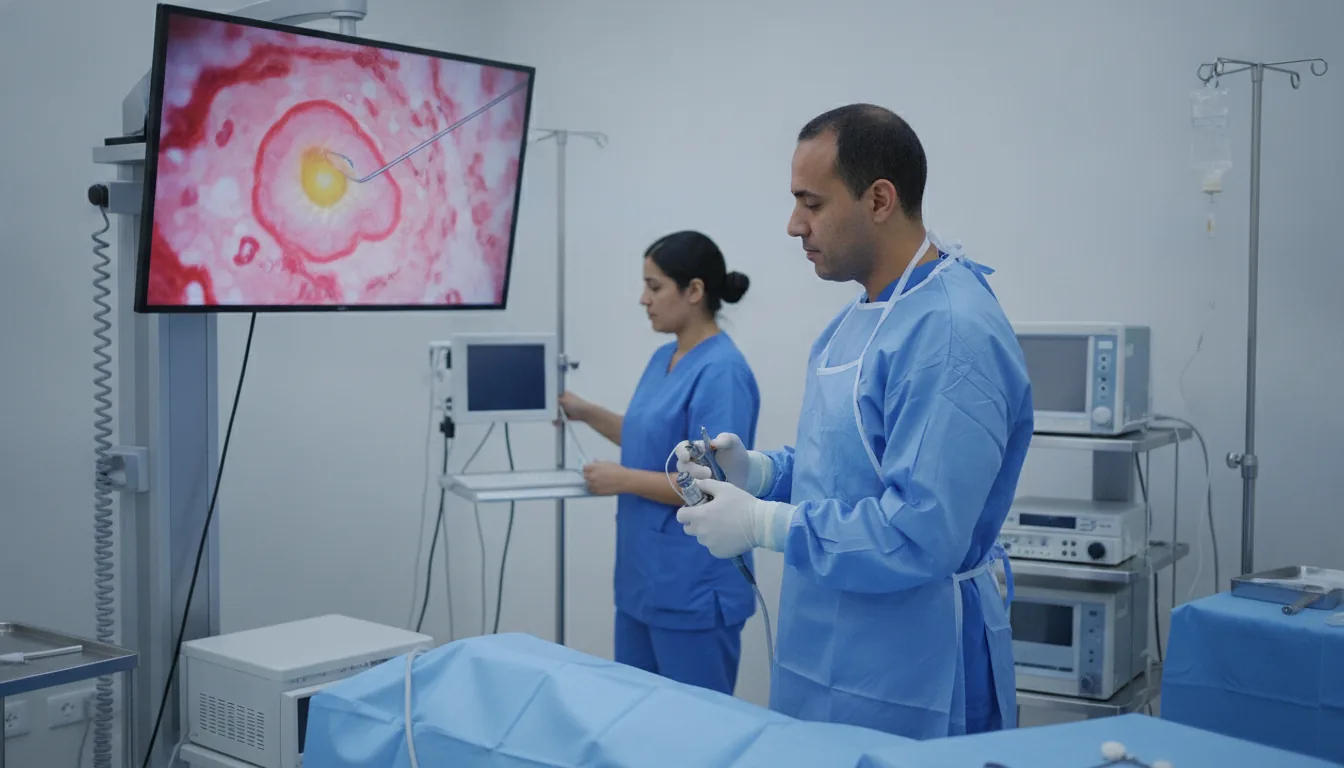
Mucosectomy
Endoscopic resection of extensive superficial lesions of the digestive lining, a minimally invasive alternative to surgery.
What is it?
When is it indicated?
Some polyps that are too flat or too wide for simple removal are first lifted and then removed using this dedicated technique.
Abnormalities limited to the surface of the digestive wall can be removed through the natural orifices, without surgery.
Removing a lesion before it transforms very often avoids a more invasive operation later on.
Certain well-demarcated lesions of the first part of the intestine can be resected endoscopically after specialist assessment.
When the lesion remains superficial, this technique avoids a surgical operation while providing complete treatment.
Preparation
Procedure
Sedation or general anesthesia depending on the location
Precise identification of the lesion and delineation of its margins
Submucosal injection to lift the lesion
Snare resection, in one or several fragments
Careful inspection of the resection site and preventive coagulation
Post-procedure monitoring in the recovery room, then a short hospital stay if necessary
Duration
30 minutes to 1 hour 30 depending on the size of the lesion
Aftercare & Recovery
Mucosectomy most often achieves complete resection of the lesion without surgery. Histopathological analysis of the fragments confirms the quality of the resection and determines the schedule of follow-up endoscopies. Eating is resumed gradually the same day or the next day.
Risks and side effects
These risks remain rare. Your surgeon will inform you in detail before the procedure.
Request a Quote
Contact us to schedule a consultation or receive a personalized quote.
Request a Quote +216 36 402 000