
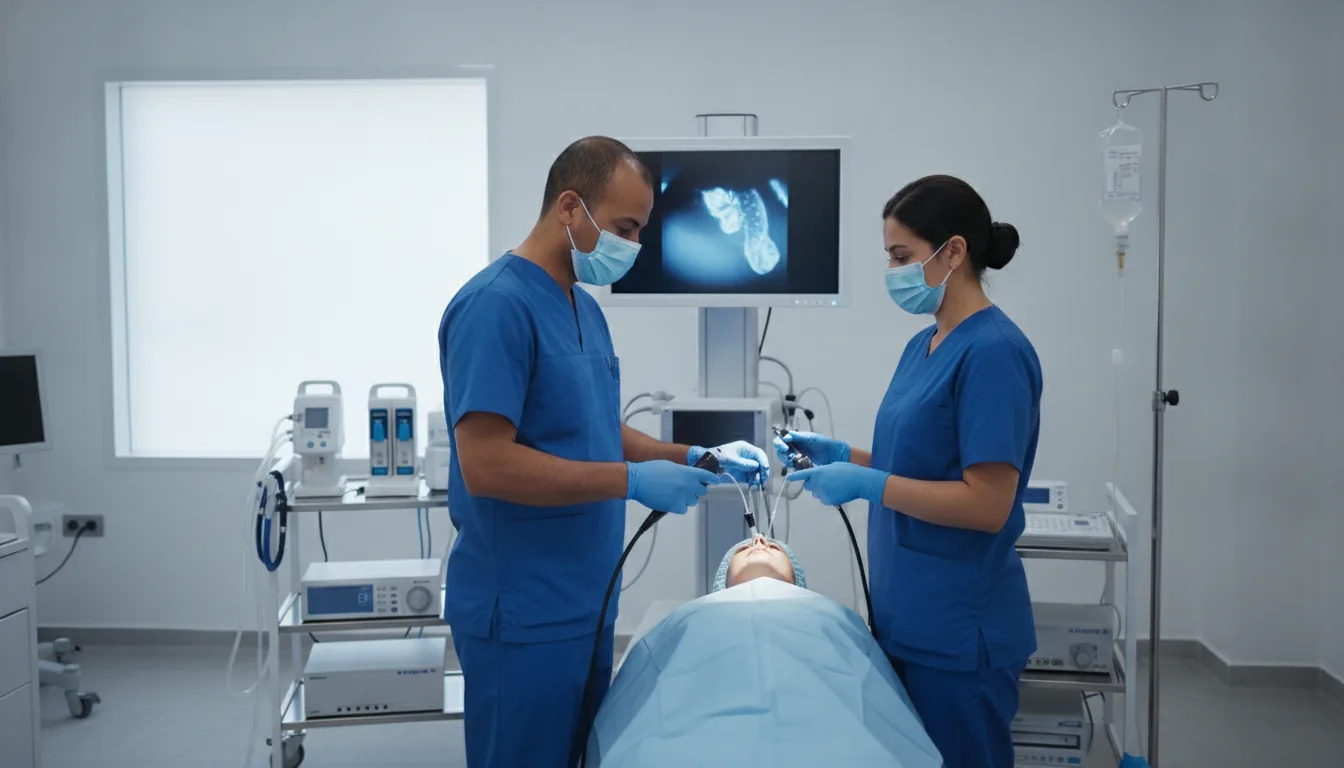
Endoscopic dilation

Endoscopic dilation

Endoscopic widening of narrowed segments of the digestive tract, to restore normal food passage or bowel function.

What is it?

Certain conditions can lead to a narrowing (stricture) of the digestive tract: scarring after inflammation or surgery, inflammatory diseases, motility disorders of the esophagus such as achalasia. These strictures hinder the passage of food or bowel function and can be treated by endoscopic dilation, without an incision. The procedure consists of gradually widening the narrowed area using inflatable balloons or bougies of increasing caliber, introduced under direct vision through the endoscope. Several sessions spaced over time are sometimes needed to achieve a stable, lasting result. At Clinique Pasteur Tunis, endoscopic dilations are performed under sedation or anesthesia, on a day-case basis in most instances, by experienced endoscopists. The patient is monitored after the procedure and goes home with simple dietary instructions.
Endoscopic dilation

When is it indicated?

Esophageal stricture hindering swallowing

When the esophagus narrows and food passes with difficulty, widening it with a balloon restores normal eating.

Scar-related narrowing after digestive surgery

Internal scarring can narrow the digestive tract after an operation; dilation restores a comfortable passage.

Strictures related to inflammatory bowel diseases

Chronic inflammation can narrow the intestine; dilation sometimes makes it possible to avoid further surgery.

Achalasia and certain motility disorders of the esophagus

When the lower esophagus does not relax properly, dilation eases the passage of food into the stomach.

Stricture after endoscopic treatment or radiotherapy

Some treatments can leave a scar-related narrowing; dilation sessions gradually restore the normal caliber.

Preparation

1Prior endoscopy or imaging to determine the location and nature of the narrowing
2Anesthesia consultation
3Fasting for 6 hours before the procedure
4Adjustment of anticoagulants according to medical advice

Procedure

1

Sedation or general anesthesia depending on the location

2

Insertion of the endoscope down to the narrowed area

3

Careful crossing of the stricture, sometimes guided by a flexible wire

4

Gradual dilation with a balloon or bougie

5

Visual check of the result at the end of the procedure

6

Monitoring in the recovery room before discharge

Duration

20 to 40 minutes

Aftercare & Recovery

Improvement in food passage or bowel function is often felt quickly. Eating is resumed gradually, starting with suitable textures. Depending on the nature of the stricture, additional sessions may be scheduled to consolidate the result.

Risks and side effects

Temporary pain or discomfort after the procedure
Minor local bleeding, most often of no consequence
Perforation, a rare complication warranting systematic monitoring after dilation
Recurrence of the narrowing requiring further sessions

These risks remain rare. Your surgeon will inform you in detail before the procedure.

Request a Quote

Contact us to schedule a consultation or receive a personalized quote.

Request a Quote +216 36 402 000

At a glance

Duration: 20 to 40 minutes
Preparation: Required
Dedicated specialist team