
Pre-operative urodynamic assessment
Centres/Urodynamic Testing/Pre-operative urodynamics

Pre-operative urodynamic assessment

Complete functional assessment performed before urological surgery to confirm the diagnosis and guide the choice of operation.

What is it?

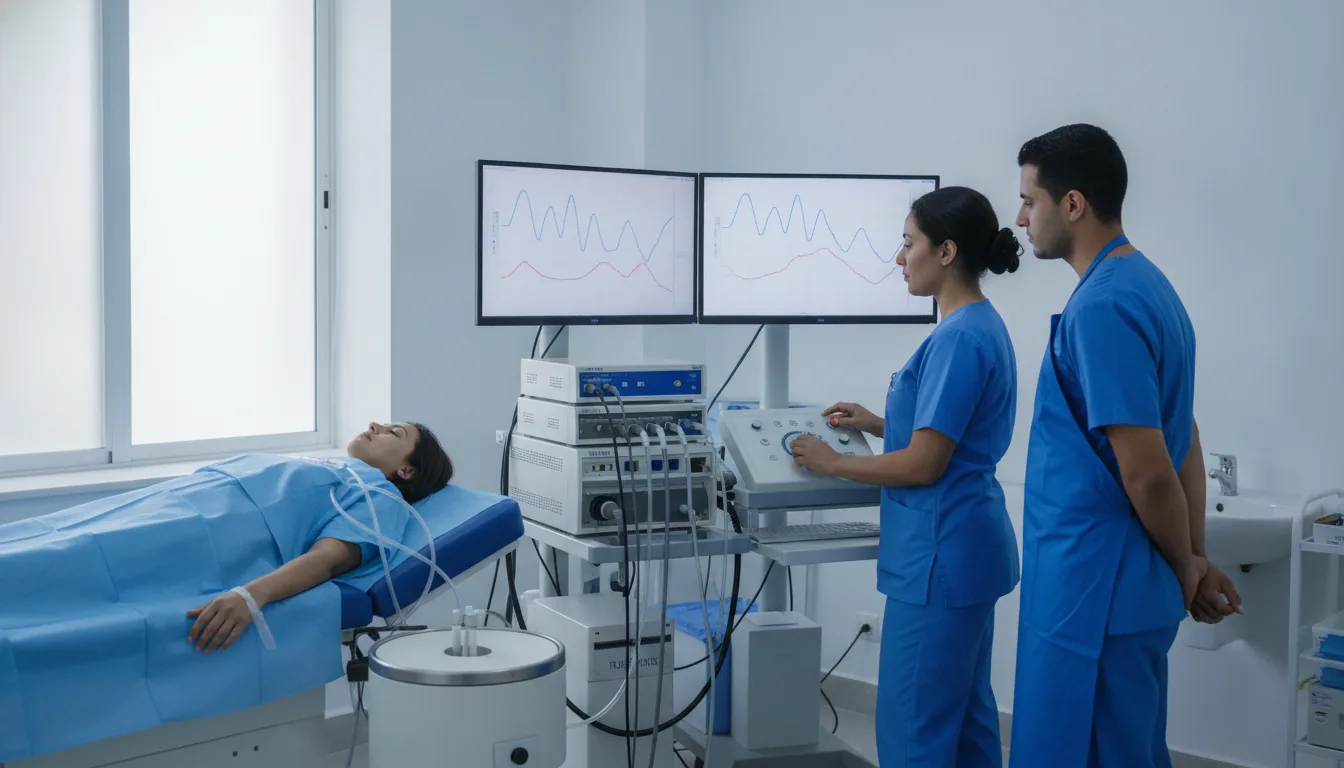
The pre-operative urodynamic assessment is a complete functional exploration systematically performed before certain urological operations. Its purpose is twofold: to confirm the functional diagnosis that justifies the surgery and to provide baseline data for evaluating the post-operative result. Before prostatic deobstruction surgery (transurethral resection, adenomectomy, laser), the pre-operative assessment confirms bladder outlet obstruction by means of the pressure-flow study and detects any associated detrusor underactivity. In the absence of confirmed obstruction, surgery may not improve the patient's symptoms. Before urinary incontinence surgery in women (suburethral sling, colposuspension), the assessment evaluates the urethral closure pressure, bladder capacity, compliance and detrusor stability. These parameters guide the choice of surgical technique and allow the patient to be informed about the chances of success and the risks of complications. This assessment is also indispensable before the placement of an artificial urinary sphincter or a sacral neuromodulator, and before bladder augmentation. It represents an important medico-legal step because it documents the pre-operative functional state and objectively justifies the indication for surgery.
Pre-operative urodynamic assessment

When is it indicated?

Before transurethral resection of the prostate (TURP) or adenomectomy

Before a prostate operation, it confirms that an obstacle really is hindering voiding and that the operation is justified.

Before incontinence surgery (TOT/TVT suburethral sling)

It helps choose the most appropriate technique before an operation for urinary leakage.

Before placement of an artificial urinary sphincter

It reviews urinary function before the placement of a device controlling urinary closure.

Before implantation of a sacral neuromodulator

It evaluates the bladder before the placement of a stimulator intended to improve its function.

Before bladder augmentation (enterocystoplasty)

It documents bladder function before an operation intended to increase its capacity.

Before prolapse surgery with associated incontinence

It helps prepare an operation when organ prolapse and urinary leakage occur together.

Before any major functional urological surgery

It provides a baseline evaluation of urinary function before a major operation.

Preparation

1Sterile urine culture less than 7 days old (mandatory, the test will be cancelled in the case of infection)
2Stop urological treatments that may interfere 48 to 72 hours beforehand (on the surgeon's advice)
3Bring the complete medical file: surgical consultation, imaging, laboratory tests
4Arrive with a naturally full bladder
5Allow for a substantial examination time (about 1 hour)
6Report any anticoagulant or antiplatelet treatment

Procedure

1

Initial free uroflowmetry with measurement of the post-void residual

2

Placement of the pressure sensors (bladder catheter and rectal sensor)

3

Filling cystometry: assessment of sensation, compliance and stability

4

Urethral profilometry at rest and during effort (if incontinence surgery)

5

Pressure-flow study during voiding (if deobstruction surgery)

6

Measurement of the final post-void residual

7

Results given to the surgeon to validate the indication for surgery

Duration

45 minutes to 1 hour

Results

The detailed pre-operative report is sent to the surgeon. It includes all the measured parameters and a functional conclusion confirming or refuting the indication for surgery. It serves as a reference document for post-operative comparison. Results available within 48 to 72 hours.

Risks and side effects

Same risks as the complete urodynamic assessment
Moderate discomfort for the duration of the test
Low risk of urinary tract infection
Transient burning on urination
Possible postponement of surgery if the results contraindicate the operation

These risks remain rare. Your physician will inform you in detail before the examination.

Book an Appointment

Contact us to schedule your examination or request a quote.

Request a Quote +216 36 402 000

At a glance

Duration: 45 minutes to 1 hour
Preparation: Required
Book an appointment