
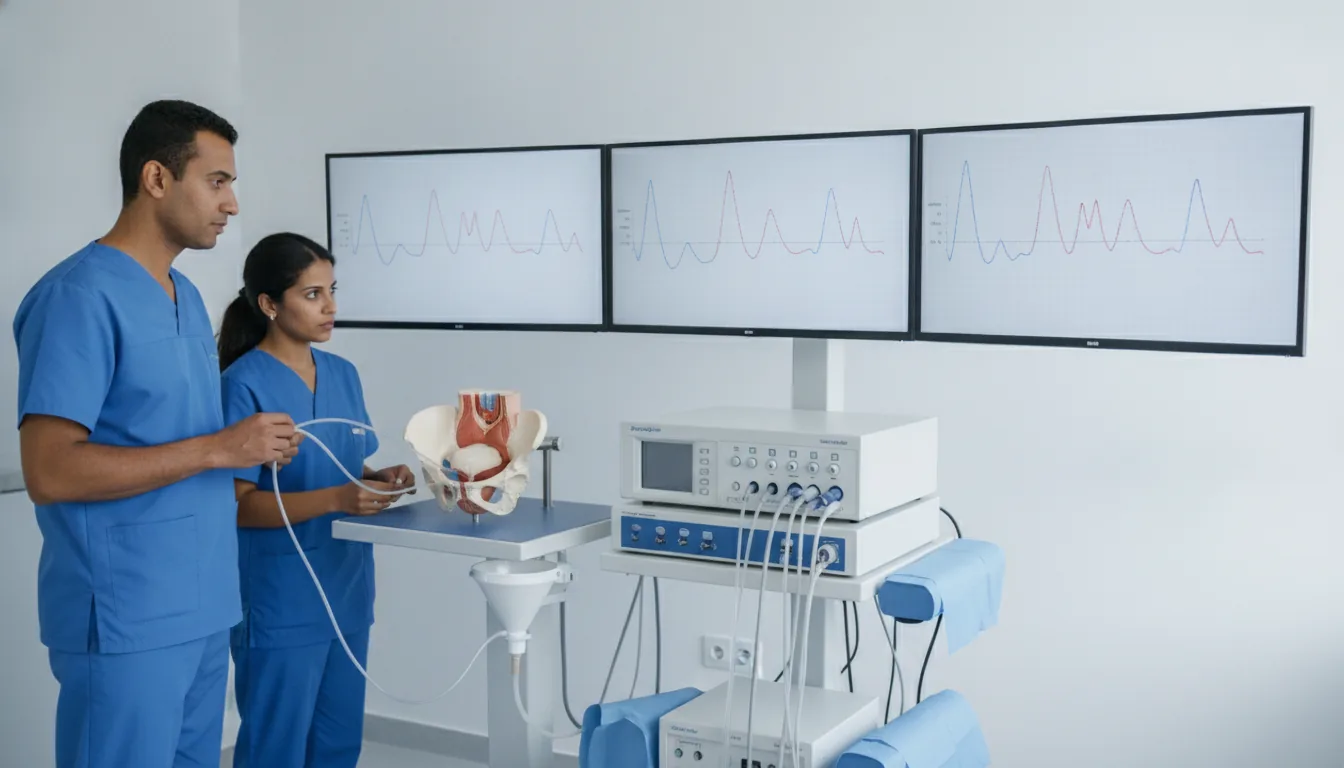
Complete multichannel urodynamic assessment
Centres/Urodynamic Testing/Complete urodynamics

Complete multichannel urodynamic assessment

Complete, simultaneous exploration of all phases of the voiding cycle combining cystometry, profilometry and pressure-flow study.

What is it?

The complete multichannel urodynamic assessment is the most exhaustive functional exploration of the lower urinary tract. It combines several complementary tests in a single session: uroflowmetry, filling cystometry, pressure-flow study and urethral profilometry, with simultaneous recording on several pressure channels. Multichannel recording makes it possible to measure bladder pressure, abdominal (rectal) pressure, detrusor pressure (calculated), urethral pressure and urinary flow at the same time. This comprehensive approach provides a complete picture of bladder and sphincter function and allows the different parameters to be correlated with one another. This assessment is indispensable in complex clinical situations where a single test is not enough to establish a precise diagnosis. It is particularly useful in conditions combining several dysfunctions (for example, obstruction and bladder instability, or mixed incontinence) and in cases where an initial simplified assessment was inconclusive. The complete multichannel urodynamic assessment is the gold standard of functional urological exploration, and its results directly guide the treatment strategy: medical treatment, pelvic floor rehabilitation, neuromodulation or surgery.
Complete multichannel urodynamic assessment

When is it indicated?

Complex or mixed urinary incontinence

It is offered for urinary leakage involving several mechanisms that are difficult to understand with a single test.

Neurogenic bladder (spinal cord injury, multiple sclerosis, spina bifida)

It provides a complete evaluation of the bladder when a neurological disease disturbs its function.

Complete pre-operative assessment (prostate surgery, incontinence repair)

It provides an overall picture of urinary function before a major operation.

Failure of medical treatment for urinary disorders

It is useful when medication has not improved urinary disorders, to redirect management.

Voiding disorders of undetermined aetiology

It helps clarify the origin of urinary difficulties that remain unexplained after the initial tests.

Complex functional bladder and sphincter disorders

It allows a detailed exploration of disorders combining several abnormalities of bladder and sphincter function.

Follow-up of neurological patients at risk for the upper urinary tract

It helps monitor the bladder in order to protect the kidneys in neurological patients exposed to this risk.

Preparation

1Sterile urine culture less than 7 days old (mandatory)
2Arrive with a naturally full bladder
3Stop treatments that may interfere (anticholinergics, alpha-blockers) 48 to 72 hours beforehand, on medical advice
4Bring all results of previous tests (ultrasound, imaging, previous assessments)
5Allow for a longer examination time than for simple tests
6Report any allergy or any anticoagulant treatment

Procedure

1

Initial uroflowmetry with measurement of the post-void residual

2

Insertion of the multichannel bladder catheter and the rectal sensor

3

Filling phase: cystometry with recording of pressures and sensation

4

Urethral profilometry at rest and during effort

5

Emptying phase: pressure-flow study with simultaneous recording

6

Final uroflowmetry and measurement of the post-void residual

7

Removal of all equipment and post-examination advice

Duration

45 minutes to 1 hour

Results

The detailed report incorporates all the measured parameters: bladder capacity, compliance, detrusor stability, urethral closure pressure, presence or absence of obstruction, and quality of the voiding contraction. It is available within 48 to 72 hours and allows a precise functional diagnosis to be made.

Risks and side effects

Moderate discomfort related to the duration of the test and the presence of the catheters
Low risk of urinary tract infection (prevented by the prior urine culture)
Possible burning on urination for 24 to 48 hours
Possible traces of blood in the urine for 24 hours
Rarely: vasovagal reaction during catheter insertion

These risks remain rare. Your physician will inform you in detail before the examination.

Book an Appointment

Contact us to schedule your examination or request a quote.

Request a Quote +216 36 402 000

At a glance

Duration: 45 minutes to 1 hour
Preparation: Required
Book an appointment