
Resting electrocardiogram (ECG)
Recording of the heart's electrical activity at rest, used to detect abnormalities of rhythm or conduction and signs of myocardial ischemia.
What is it?
When is it indicated?
When discomfort or a feeling of tightness appears in the chest, the ECG quickly checks whether the heart is the cause.
If you feel your heart beating too fast, too hard or irregularly, this tracing helps identify a possible rhythm disturbance.
Breathlessness that occurs for no apparent reason, at rest or on minimal exertion, may have a cardiac origin that the ECG helps to identify.
After fainting or dizzy spells, the examination looks for an electrical abnormality of the heart that could explain these episodes.
Before an operation, the ECG checks that the heart is working normally so that the anesthesia and the procedure can take place safely.
In a person already being treated for heart disease, regular ECGs make it possible to monitor progress and detect any change.
In cases of high blood pressure, diabetes, smoking or family history, this simple test is part of routine heart monitoring.
Some heart medications require monitoring: the ECG checks that the treatment is working properly and remains well tolerated.
Preparation
Procedure
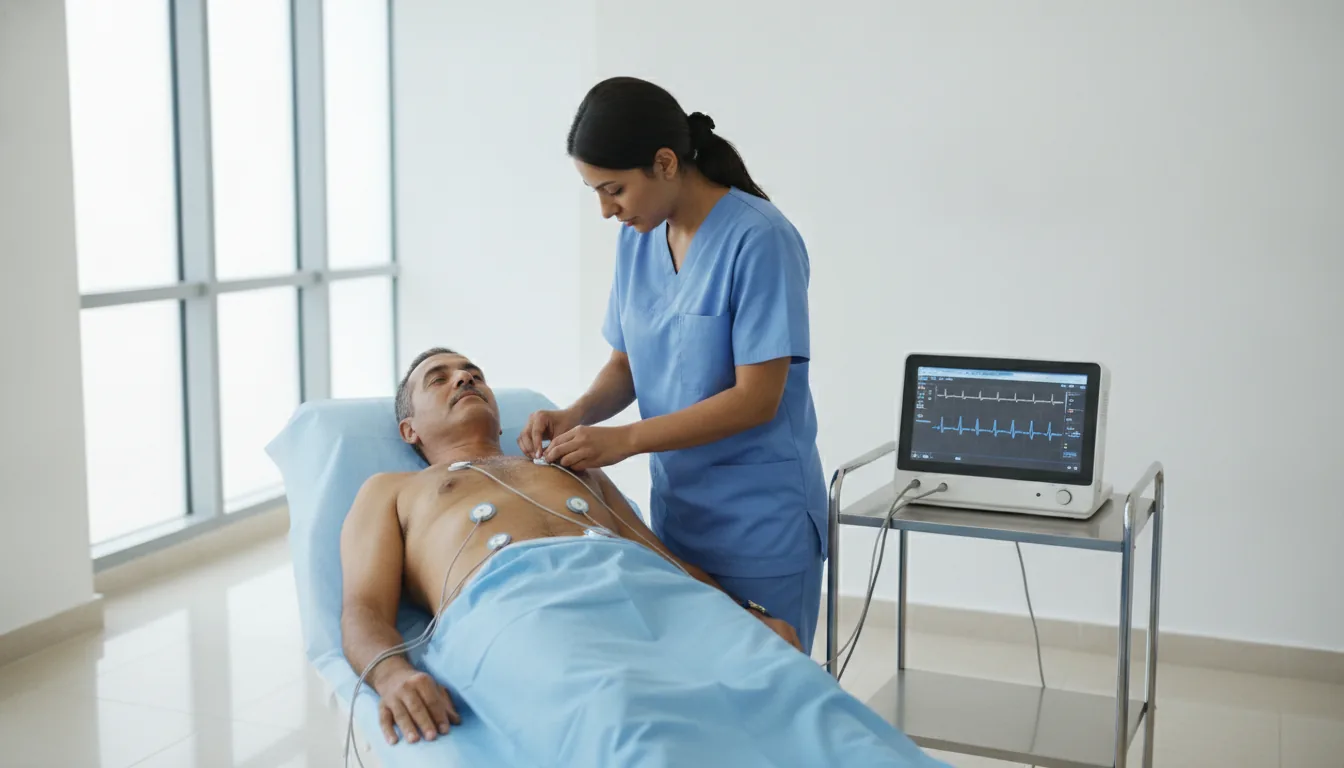
The patient lies on their back on an examination table
The technician places 10 electrodes: 6 on the chest and 4 on the limbs (wrists and ankles)
A conductive gel is applied to improve contact between the electrodes and the skin
The recording lasts about 10 seconds, during which the patient must remain still and relaxed
The tracing is printed and analyzed by the cardiologist
The electrodes are removed and the gel is wiped off
Duration
5 to 10 minutes
Results
Results are available immediately after the examination. The cardiologist interprets the tracing and gives a report to the patient or their attending physician.
Book an Appointment
Contact us to schedule your examination or request a quote.
Request a Quote +216 36 402 000