
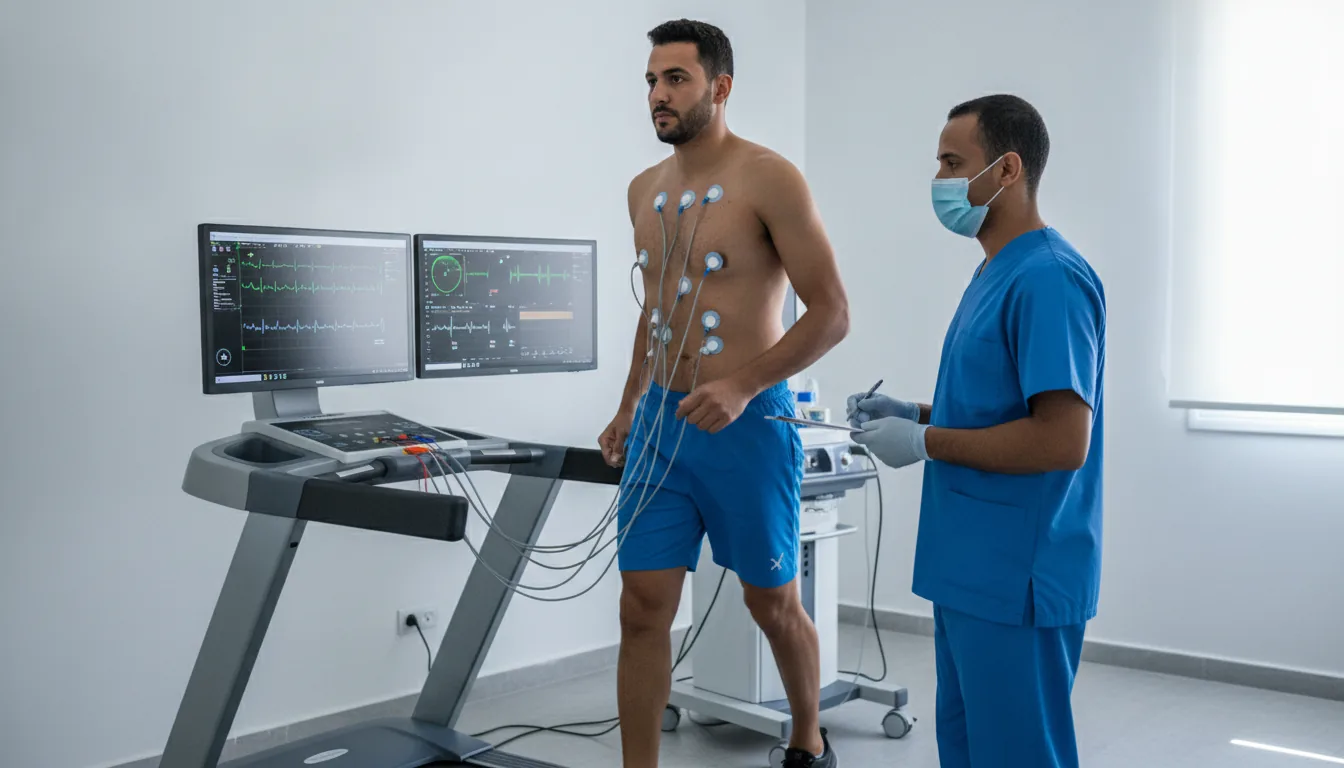
Exercise electrocardiogram on a treadmill

Exercise electrocardiogram on a treadmill

Recording of the heart's electrical activity during progressive physical exercise on a treadmill, to detect myocardial ischemia not visible at rest.

What is it?

The exercise electrocardiogram is a test that records the electrical activity of the heart while the patient performs progressive physical exercise on a treadmill. The aim is to subject the heart to controlled physiological stress in order to reveal abnormalities that are not visible at rest. This test is fundamental in the diagnosis of coronary artery disease. During exercise, the heart requires a greater supply of oxygen. If the coronary arteries have significant narrowings, blood flow becomes insufficient during exercise, causing changes detectable on the ECG and sometimes symptoms such as chest pain or abnormal shortness of breath. The treadmill stress test follows a standardized protocol (usually the Bruce protocol) with a progressive increase in the speed and incline of the treadmill. The patient is continuously monitored by a cardiologist who checks the heart rate, blood pressure and symptoms throughout the test. At the Clinique Pasteur in Tunis, this test is performed in a secure environment with resuscitation equipment immediately available. The cardiologist is present throughout the test and can stop it at any time if necessary.
Exercise electrocardiogram on a treadmill

When is it prescribed?

Chest pain suspected to be of coronary origin

When chest pain occurs while walking or during exertion, this test checks whether the heart's arteries supply enough blood when it works harder.

Assessment of multiple cardiovascular risk factors

In a person with a combination of high blood pressure, diabetes, smoking or cholesterol, the stress test helps detect silent disease of the heart's arteries.

Evaluation of functional exercise capacity

The test objectively measures what your heart can deliver during exercise, valuable information for tailoring your follow-up and activities.

Follow-up after myocardial infarction or angioplasty

After a heart attack or stent placement, this test checks that the heart has recovered well and can once again tolerate exercise without strain.

Assessment before resuming sports activity in a cardiac patient

Before returning to sport after a heart problem, the test ensures that exercise is safe and helps define the appropriate intensity.

Evaluation of exercise-induced rhythm disturbances

Some palpitations only appear during exercise: the test reproduces these conditions under supervision so they can be recorded and analyzed.

Sports fitness certificate for at-risk individuals

For people with risk factors who wish to play sports, this test confirms that the heart can cope well with intense exercise.

Preparation

1Fast for at least 2 hours before the test (a light meal is allowed)
2Wear comfortable clothing and suitable sports shoes
3Do not smoke in the 2 hours before the test
4Report all current medications, especially beta-blockers
5The cardiologist may ask you to temporarily stop certain medications 24 to 48 hours beforehand
6Avoid any intense physical exertion on the day of the test
7Bring the results of previous cardiology examinations

How the exam is performed

1

A resting ECG is first performed as a reference

2

Blood pressure is measured at rest

3

The electrodes are firmly attached to the chest

4

The patient starts walking slowly on the treadmill

5

The speed and incline increase progressively every 3 minutes (Bruce protocol)

6

The ECG, blood pressure and symptoms are monitored continuously

7

Exercise is continued until the target heart rate is reached or symptoms appear

8

A recovery phase is observed for 5 to 10 minutes after stopping exercise

9

The cardiologist analyzes all the recorded tracings

Duration

30 to 45 minutes (including preparation and recovery)

Results

Results are communicated by the cardiologist within minutes of the end of the test. A detailed report is given to the patient.

Risks and side effects

Muscle fatigue and shortness of breath (expected and normal)
Chest pain (a sign being looked for, leading to stopping the test)
Heart rhythm disturbance (rare, managed immediately)
Faintness or drop in blood pressure (exceptional)
Risk of a serious cardiac event, extremely rare (less than 1/10 000)

These risks remain rare. Your physician will explain them in detail before the exam.

Book an Appointment

Contact us to schedule your Exercise ECG or request a quote.

Request a Quote +216 36 402 000

At a glance

Duration: 30 to 45 minutes (including preparation and recovery)
Preparation: Required
Book an appointment