
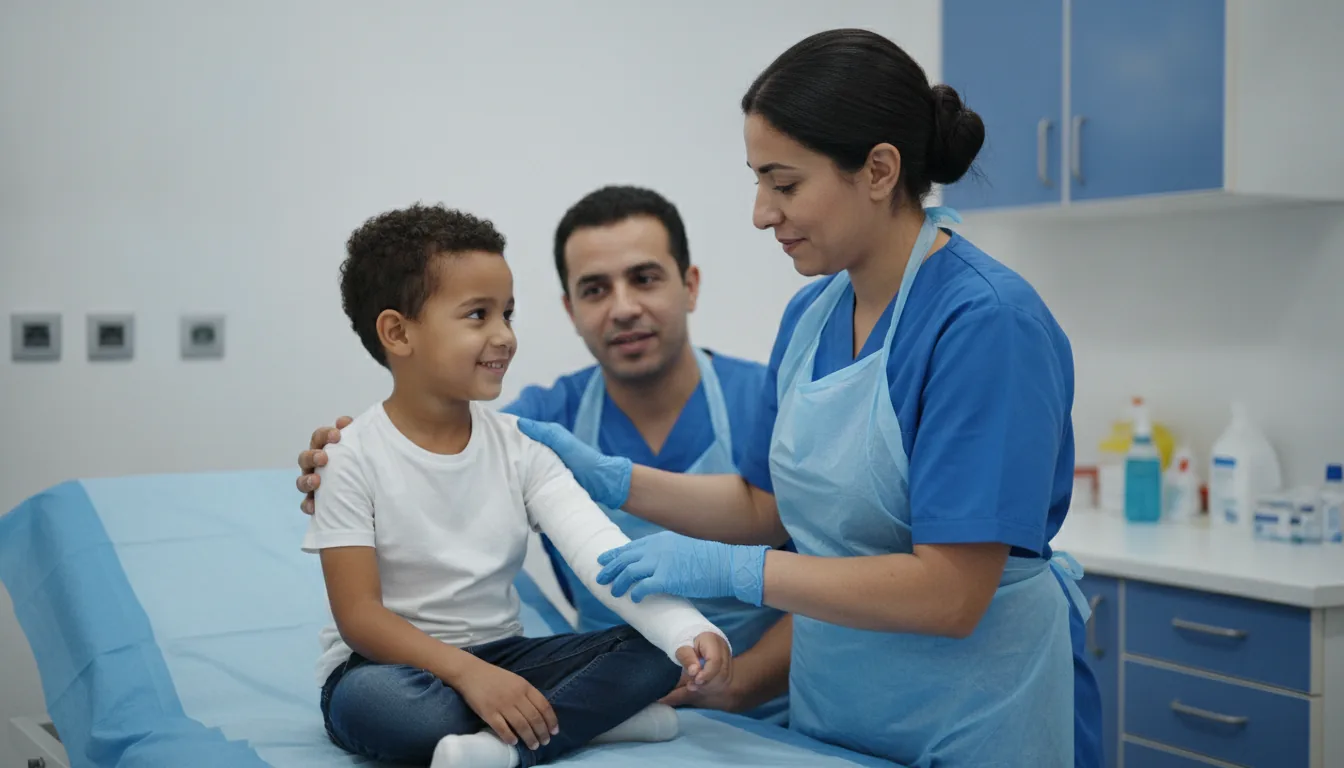
Paediatric trauma surgery
Surgeries/Pediatric/Trauma surgery

Paediatric trauma surgery

Management of fractures and injuries in children, using techniques adapted to growing bone, with direct access to the emergency department and imaging.

What is it?

Falls and accidents during play or sport are common in children, and the resulting fractures have their own particular features: growing bone has a strong capacity for healing and self-correction, but certain fractures affecting the growth plates require special attention. Treatment ranges from a simple cast to surgery when the fracture is displaced or unstable. The surgical techniques used in children are specific: hardware adapted to the size of the bone, systematic protection of the growth plates and procedures that are as minimally invasive as possible. At Clinique Pasteur Tunis, the injured child is received in the emergency department and treated without delay: on-site imaging, prompt surgical opinion and, if necessary, surgery in the operating theatre by a team experienced in paediatric trauma. Follow-up in consultation supports bone healing and the gradual return to activities.
Paediatric trauma surgery

When is it indicated?

Displaced or unstable limb fracture

When the bone fragments have moved apart, a procedure puts them back in the right position to allow perfect healing.

Fracture involving a growth plate requiring specialist assessment

The bone's growth plates are precious: a fracture affecting them requires specialist treatment and careful follow-up until growth is complete.

Injury to a child's elbow, wrist or ankle

These joints are often affected in falls; treatment adapted to children ensures a good recovery.

Deep wounds or soft-tissue injuries requiring exploration

Some injuries must be explored and repaired in the operating theatre for optimal healing without lasting effects.

Fracture that cannot be reduced by simple manipulation

When the fracture cannot be put back in place by a simple external manoeuvre, a surgical procedure adapted to growing bone is performed.

Preparation

1Assessment in the emergency department: clinical examination and X-rays
2Temporary pain-relieving immobilisation and pain treatment
3Fasting if surgery is being considered
4Anaesthesia consultation carried out as an emergency if necessary

Procedure

1

General or regional anaesthesia adapted to the child's age

2

Reduction of the fracture under X-ray guidance

3

Fixation if necessary with hardware adapted to children (pins, flexible nails)

4

Immobilisation with a cast or splint depending on the fracture

5

Monitoring in the recovery room, then a short hospital stay

6

Regular X-ray checks until the bone has healed

Duration

30 minutes to 2 hours depending on the injury

Aftercare & Recovery

Children's bones heal quickly and the results are generally excellent. Any hardware inserted is most often removed through a simple procedure once healing is complete. Return to sport is gradual, following the surgeon's advice.

Risks and side effects

Secondary displacement under the cast, detected by X-ray checks
Temporary joint stiffness after immobilisation
Growth disturbance, rare, in fractures involving the growth plate, warranting extended follow-up

These risks remain rare. Your surgeon will inform you in detail before the procedure.

Request a Quote

Contact us to schedule a consultation or receive a personalized quote.

Request a Quote +216 36 402 000

At a glance

Duration: 30 minutes to 2 hours depending on the injury
Preparation: Required
Dedicated specialist team