
Paediatric inguinal hernia surgery
Surgical repair of inguinal hernia in children, a common and well-standardised procedure, most often performed as day surgery.
What is it?
When is it indicated?
A small lump appearing in the groin crease, especially when the child cries or strains, is the most common sign of a hernia.
In children, a hernia does not go away on its own: once confirmed by the surgeon, a minor procedure corrects it permanently.
Operating on the hernia prevents part of the intestine from becoming trapped in it, a painful situation that would require emergency surgery.
When the hernia becomes tender or grows larger, it is best to correct it without delay, for the child's comfort and safety.
This small fluid-filled swelling of the scrotum, linked to the same canal that has remained open, is corrected by the same simple procedure.
Preparation
Procedure
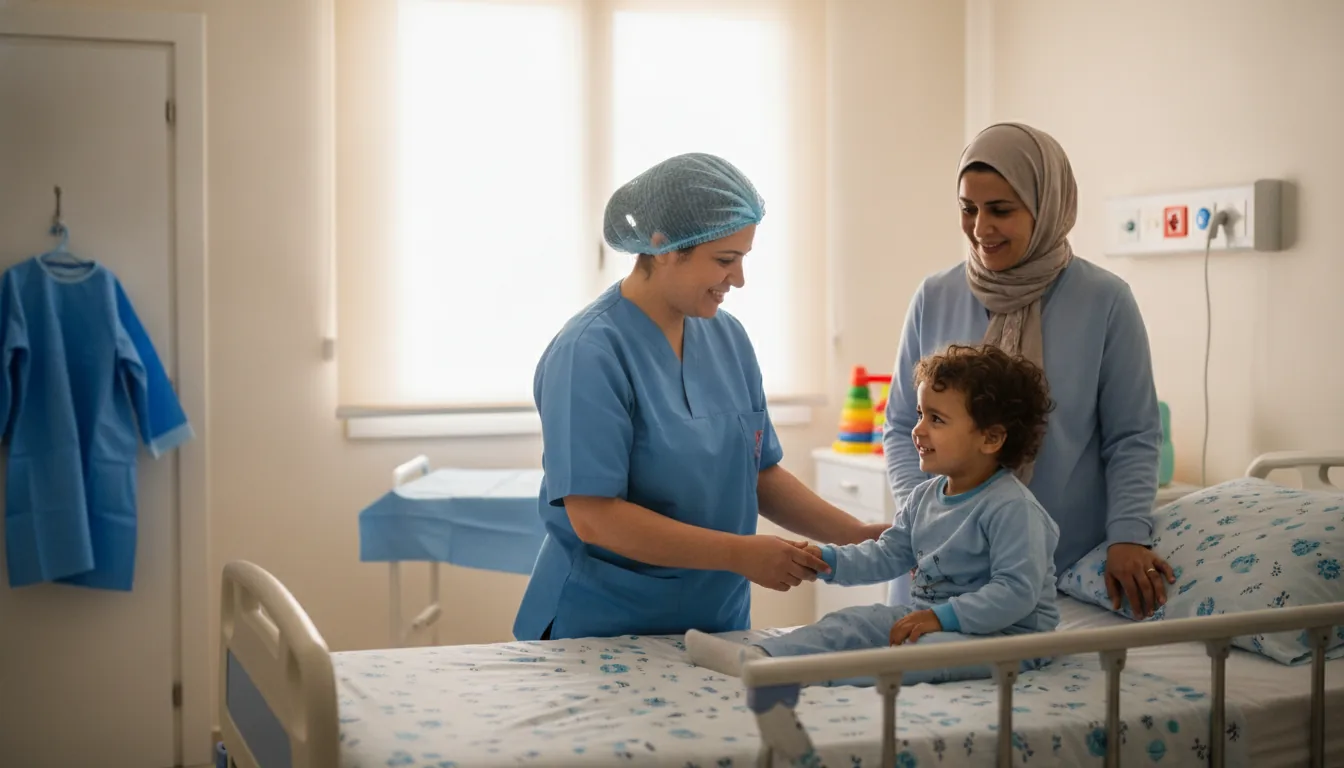
Welcome of the child and parents on the day of the procedure
General anaesthesia adapted to the child's age, often combined with regional anaesthesia for post-operative comfort
Short, discreet incision in the groin crease (or laparoscopic approach depending on the case)
Closure of the patent processus vaginalis
Closure with absorbable sutures, with no stitches to remove
Monitoring in the recovery room, then return to the parents
Duration
30 to 45 minutes
Aftercare & Recovery
Recovery is usually very straightforward: the child most often goes home the same day and quickly resumes normal activities. Moderate pain, well controlled by the prescribed painkillers, may persist for a few days. A follow-up consultation checks that healing is progressing well.
Risks and side effects
These risks remain rare. Your surgeon will inform you in detail before the procedure.
Request a Quote
Contact us to schedule a consultation or receive a personalized quote.
Request a Quote +216 36 402 000