
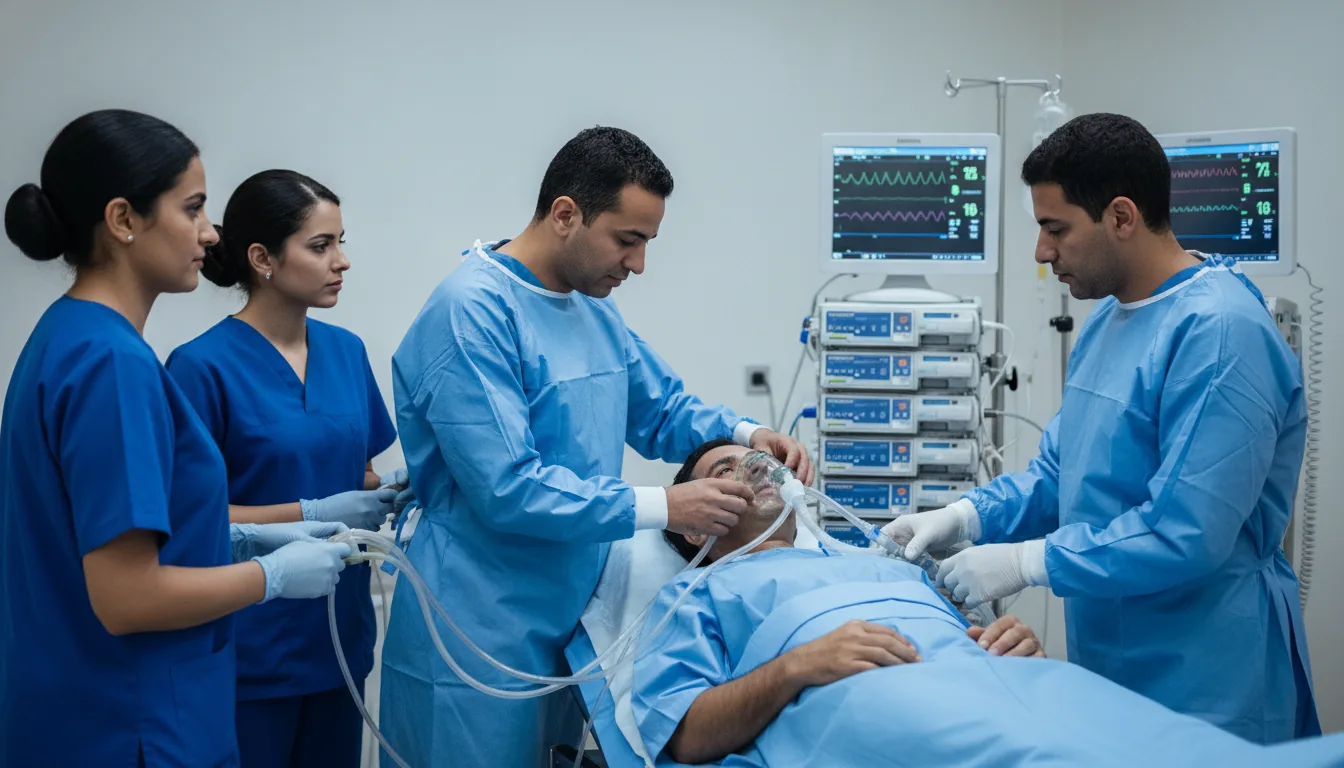
Emergency resuscitation
Immediate management of life-threatening conditions by a trained team, with direct transfer to the clinic's intensive care units.
What is it?
When is it indicated?
When the heart stops or beats dangerously, the trained team immediately begins resuscitation procedures, including defibrillation if needed.
When the lungs can no longer provide sufficient oxygenation, respiratory support is put in place without delay.
Shock corresponds to a severe failure of the blood circulation: IV fluids and emergency medications are administered immediately to restore it.
An unconscious person is protected, monitored and urgently investigated to identify the cause and treat it.
After a serious accident or significant blood loss, the patient is stabilized in the resuscitation room before being directed to the operating theatre or intensive care.
Procedure
Direct admission to the resuscitation room, bypassing the standard circuit
Immediate setup of full monitoring (heart, blood pressure, oxygen)
Resuscitation procedures as required: oxygenation, ventilation, cardiac massage, defibrillation
Placement of IV lines and administration of emergency medications
Bedside diagnostic tests (ultrasound, electrocardiogram, on-site laboratory samples)
Stabilization then transfer to intensive care or the operating theatre depending on the diagnosis
Results
After stabilization, the patient is admitted to the intensive care or critical care unit best suited to their condition, where treatment continues under continuous monitoring. Families are kept regularly informed by the medical team.
Book an Appointment
Contact us to schedule your examination or request a quote.
Request a Quote +216 36 402 000