
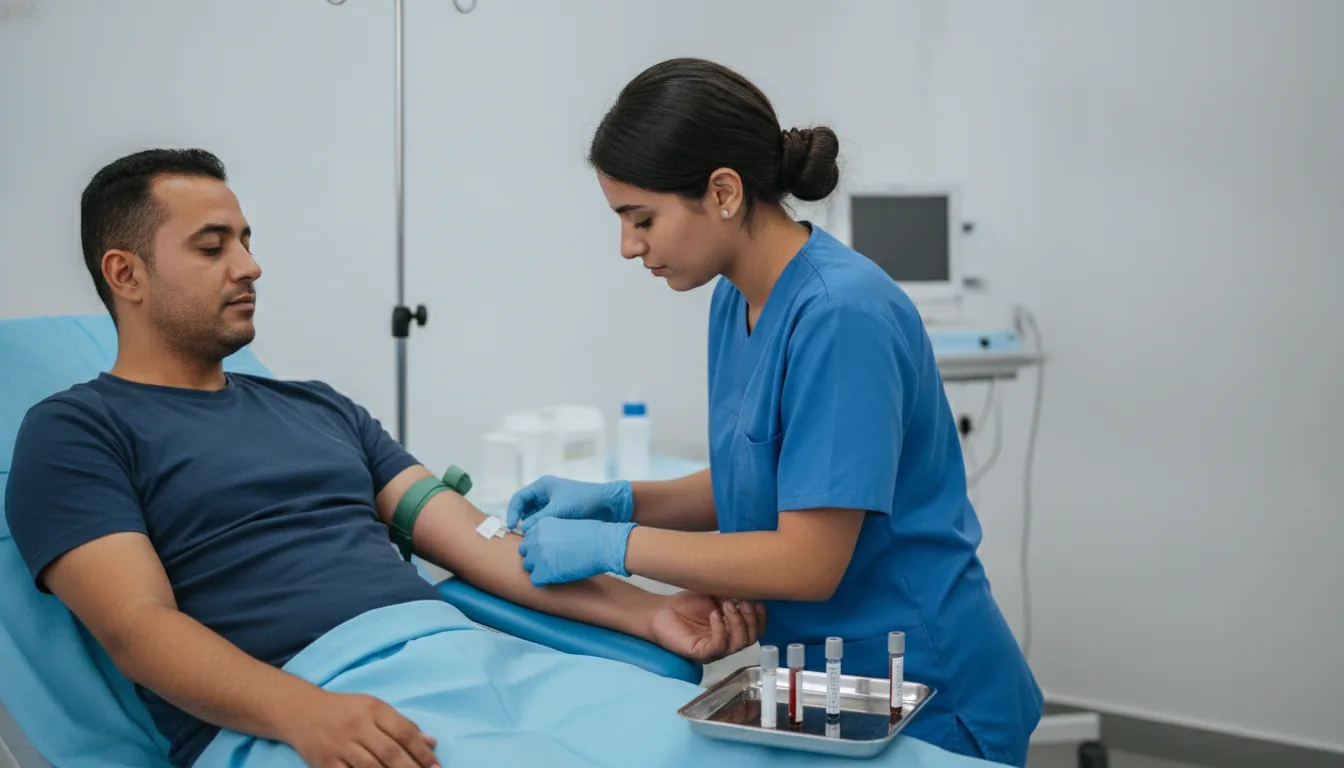
Emergency laboratory tests
Samples taken on site in the emergency department, with analyses performed continuously on site for rapid results.
What is it?
When is it indicated?
A simple blood test can detect substances released into the blood when the heart is under strain, and quickly guide the diagnosis.
Blood and urine tests help confirm an infection, assess its severity and choose the right treatment.
Before emergency surgery, a blood workup checks coagulation in particular so that the operation can proceed in complete safety.
The blood workup measures sugar, electrolytes and kidney function to understand the cause of the malaise and correct the imbalance.
In patients on blood thinners, a test checks that the treatment is properly dosed, neither too strong nor insufficient.
The tests help determine whether the liver, the pancreas or the kidneys are the source of the pain, complementing imaging.
Procedure
Tests prescribed by the emergency physician
Blood or urine sample taken on site, in the treatment room
Immediate transport of the samples for on-site analysis
Continuous processing of the analyses, at any hour
Results transmitted to the emergency physician as soon as they are validated
Duration
The results of urgent tests are generally available within about 1 hour
Results
The results are interpreted by the emergency physician in light of the clinical examination and imaging, in order to establish the diagnosis and adjust the treatment without delay.
Risks and side effects
These risks remain rare. Your physician will inform you in detail before the examination.
Book an Appointment
Contact us to schedule your examination or request a quote.
Request a Quote +216 36 402 000