
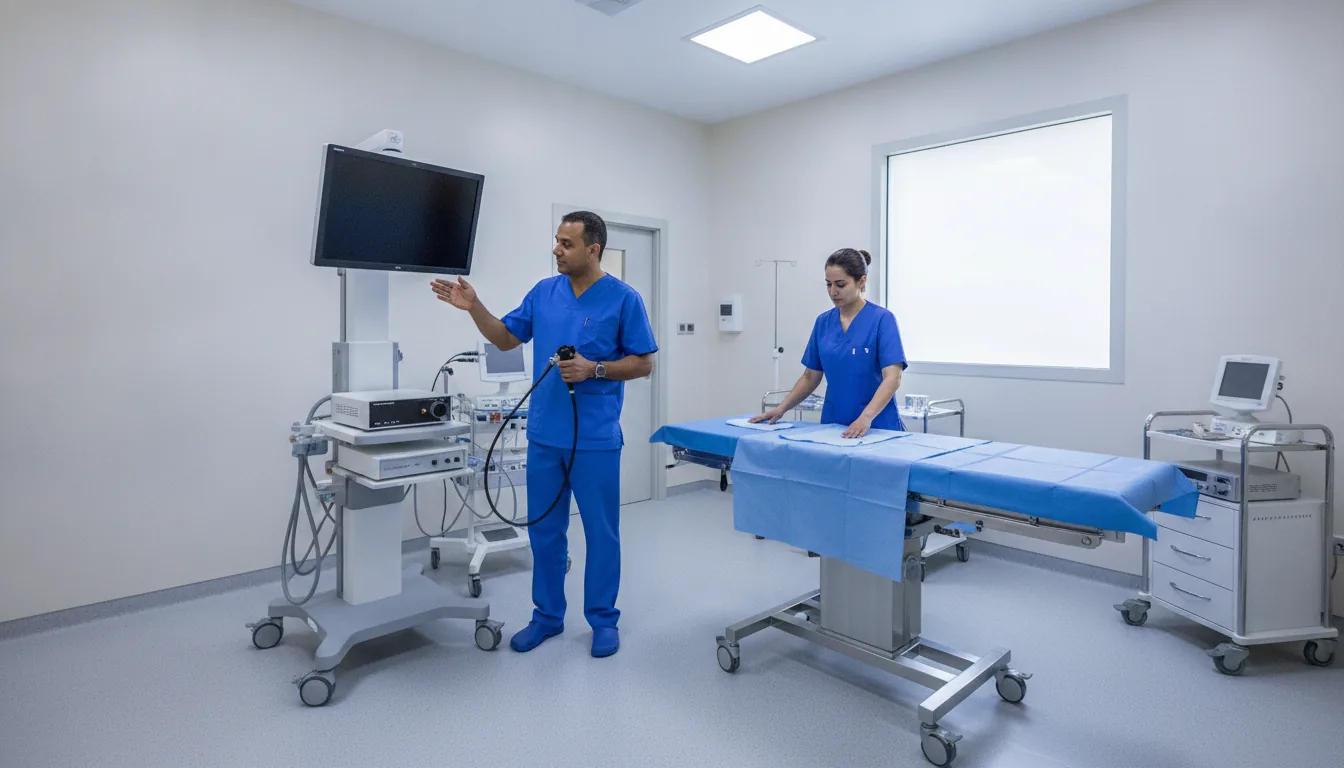
Digestive endoscopies
Gastroscopies and colonoscopies performed in the day hospital, under sedation, with a return home the same day.
What is it?
When is it indicated?
Gastroscopy provides a direct view of the oesophagus and stomach to find the cause of pain or burning that persists.
A lasting change in bowel habits or the presence of blood must be investigated: colonoscopy examines the colon to identify the cause.
A shortage of red blood cells may stem from subtle digestive bleeding: endoscopy searches for this bleeding in order to treat it.
Polyps are small growths that can change over time: colonoscopy makes it possible to detect and remove them during the same examination.
Some diseases of the stomach or intestine require regular endoscopic check-ups to track their progression and adjust treatment.
During the same examination, the doctor can take a tissue sample for analysis, remove a polyp or widen a narrowed passage.
Preparation
Procedure
Reception at the day hospital and settling into the room
Pre-anaesthesia checks and placement of an intravenous line if sedation is planned
Examination carried out in a dedicated endoscopy suite
Biopsies or therapeutic procedures if needed during the same examination
Monitoring in the recovery room and then in the room
Light meal and discussion with the doctor before discharge
Duration
15 to 45 minutes for the examination; about half a day of presence at the clinic
Results
A report is provided at discharge with the initial conclusions. The results of any biopsies are communicated during a follow-up consultation and sent to the referring doctor.
Risks and side effects
These risks remain rare. Your physician will inform you in detail before the examination.
Book an Appointment
Contact us to schedule your examination or request a quote.
Request a Quote +216 36 402 000