
Biopsies

Biopsies

Tissue samples taken in the day hospital, most often under imaging guidance, to establish a precise diagnosis.

What is it?

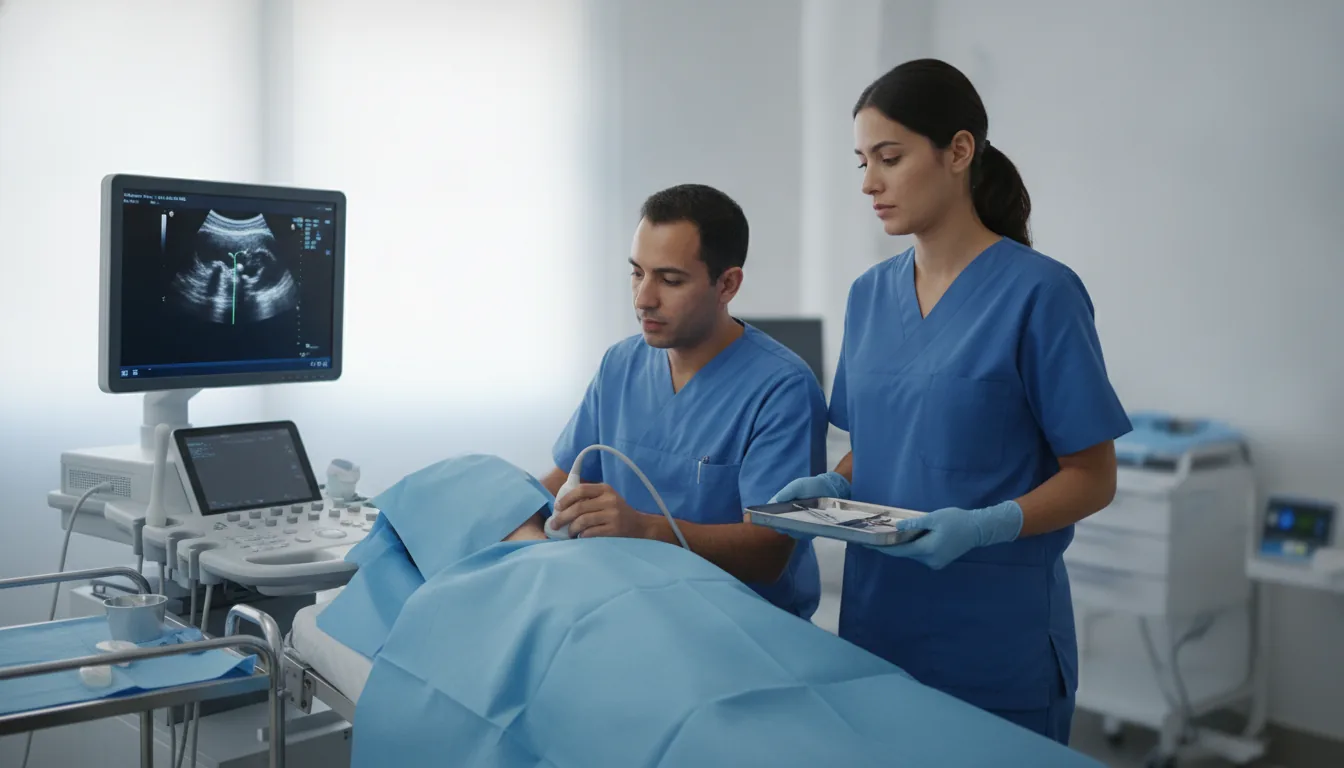
A biopsy involves taking a small tissue sample for examination under the microscope. It is a key examination for establishing a precise diagnosis, particularly in the case of a nodule, a lesion discovered on imaging or an unexplained laboratory abnormality. It concerns many organs: breast, thyroid, liver, prostate, lymph nodes and skin. Most biopsies are performed under local anaesthesia, often with imaging guidance (ultrasound or CT scan) that allows the area to be sampled to be targeted with great precision. Some deeper biopsies may require a short sedation, decided in advance with the doctor. Day-hospital care allows the procedure to be performed under optimal safety conditions: preparation, sampling, then a few hours of monitoring before the return home. The samples taken are sent for anatomical pathology analysis. At Clinique Pasteur Tunis, biopsies are performed by experienced radiologists and specialists, in coordination with the prescribing doctor. The results are explained to the patient during a dedicated consultation, with support tailored to each situation.
Biopsies

When is it indicated?

Characterisation of a breast or thyroid nodule

Taking a few cells from the nodule makes it possible to know precisely what it is and to choose the right course of action, often simply reassuring.

Lesion of the liver or another organ discovered on imaging

When an unusual image is discovered, a small sample guided by ultrasound or CT scan reveals its exact nature.

Prostate biopsy on the urologist's recommendation

This sampling, decided by the urologist following their examinations, allows the prostate tissue to be analysed and a precise diagnosis to be established.

Lymphadenopathy (enlarged lymph node) requiring investigation

A lymph node that remains swollen for no apparent reason is sampled to determine the cause, which is most often benign.

Laboratory abnormalities requiring tissue confirmation

When blood tests suggest a disease without proving it, the study of a tissue sample provides the certainty needed for proper treatment.

Preparation

1Prior consultation to explain the procedure and check for contraindications
2Coagulation tests if prescribed
3Report anticoagulant or antiplatelet treatments, which may need to be adjusted
4Fast if sedation is planned
5Arrange for an accompanying person for the return home

Procedure

1

Reception at the day hospital and settling in

2

Medical checks and consent

3

Local anaesthesia of the area to be sampled

4

Imaging-guided sampling (ultrasound or CT scan) depending on the organ concerned

5

Dressing and monitoring in the room for a few hours

6

Discharge approval by the doctor and handover of instructions

Duration

15 to 30 minutes for the procedure; a few hours of monitoring afterwards

Results

The samples are analysed in an anatomical pathology laboratory. The results are communicated to the patient during a consultation with the prescribing doctor, who explains the conclusions and any further steps in care.

Risks and side effects

Mild pain or tenderness at the puncture site, relieved by a simple painkiller
A small bruise is possible and resolves spontaneously
More significant complications are rare and prevented by day-hospital monitoring; the instructions provided specify the signs that should prompt a consultation

These risks remain rare. Your physician will inform you in detail before the examination.

Book an Appointment

Contact us to schedule your examination or request a quote.

Request a Quote +216 36 402 000

At a glance

Duration: 15 to 30 minutes for the procedure; a few hours of monitoring afterwards
Preparation: Required
Book an appointment